
Written by Zeta Tzioti
The Art Prize of the G. & A. Mamidakis Foundation is being awarded for the sixth consecutive year, reaffirming its role as an institution that actively supports contemporary artistic creation and the production of new works for the Foundation’s Collection.
Since 2019, the Prize has evolved into an important commissioning platform, enabling artists to realize original proposals that engage with place, landscape, and audience, while enriching the Foundation’s publicly accessible collection in Agios Nikolaos, Crete.
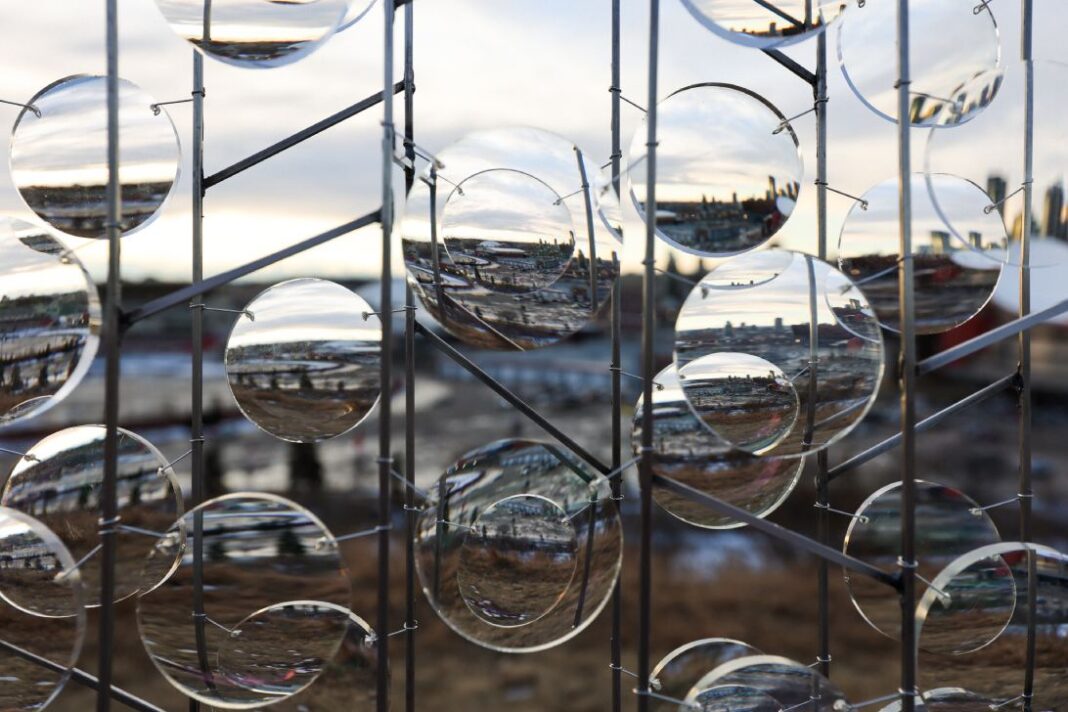
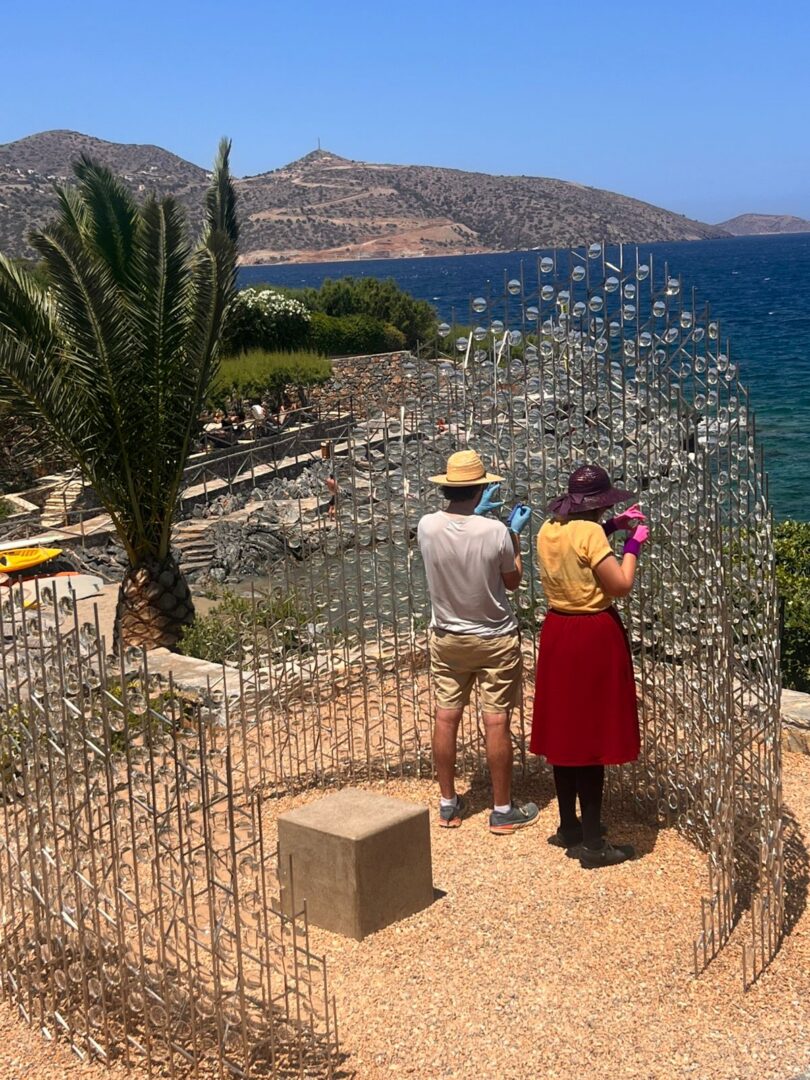
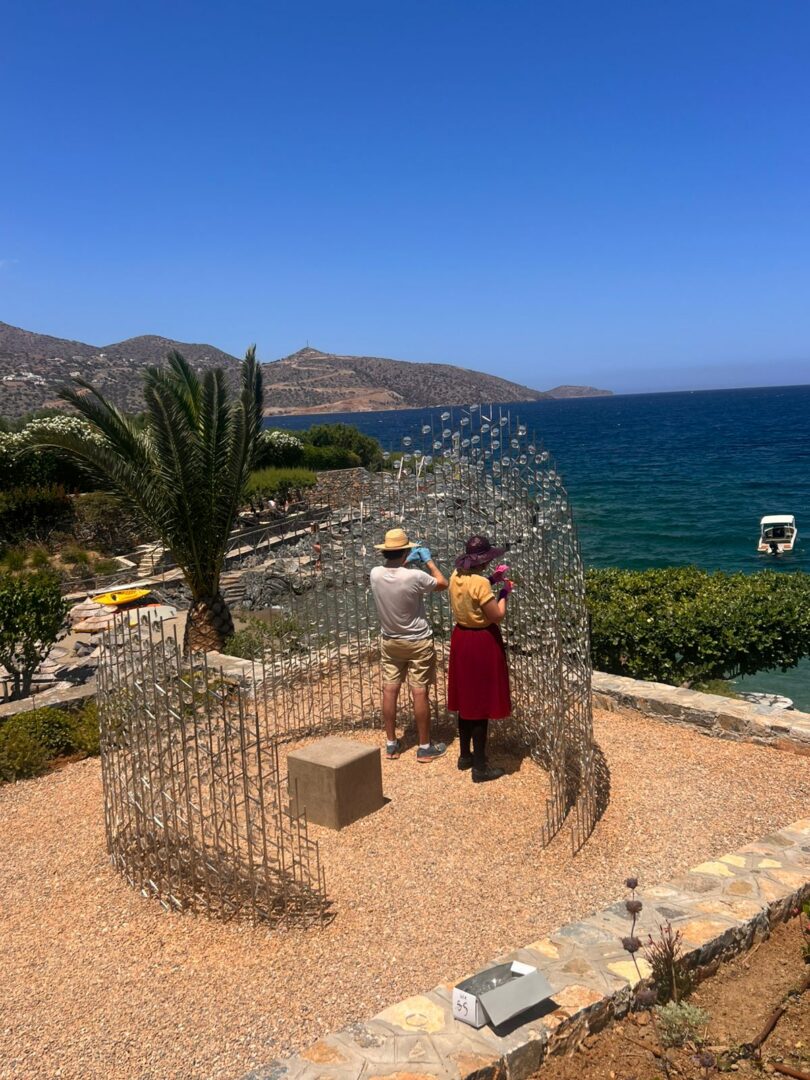
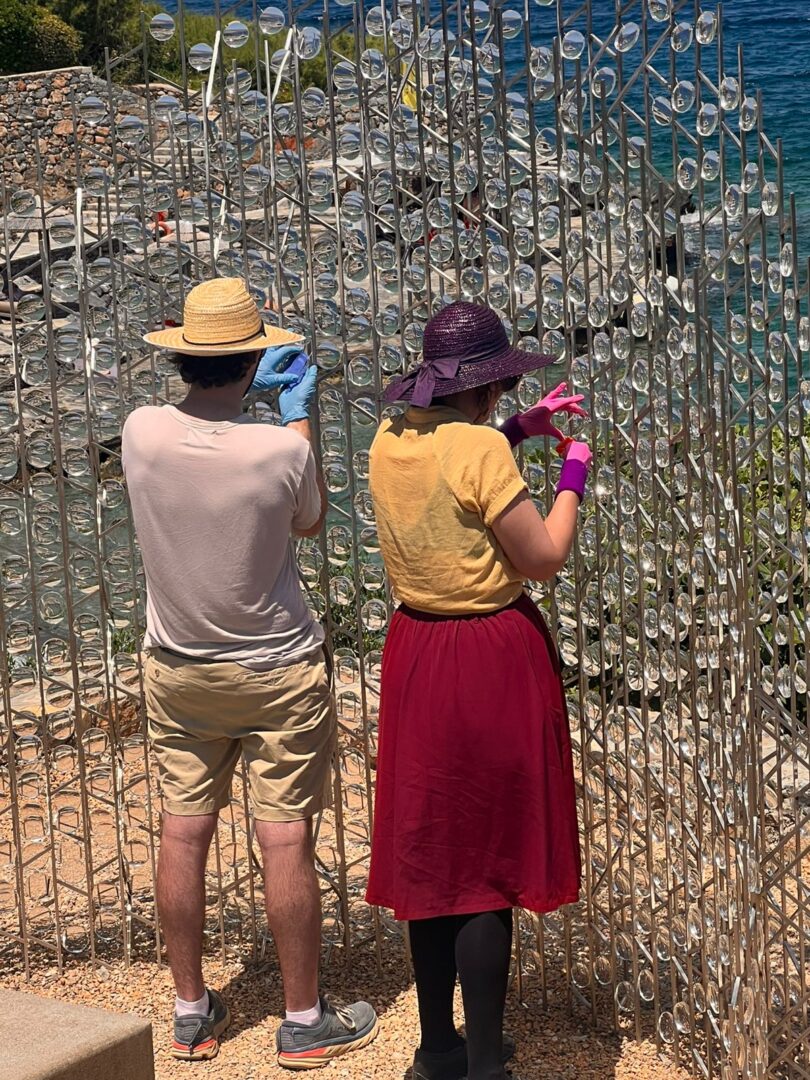
This year, the institution remains committed to supporting contemporary artistic production and the creation of new works that become part of the Foundation’s Art Collection, strengthening the dialogue between artwork, place, and viewer. This significant distinction was awarded to Canadian artists Caitlind r.c. Brown and Wayne Garrett for their proposal Chronotopia, a large-scale site-specific installation that explores the relationship between light, water, space, and time through an immersive experience of viewing and participation.
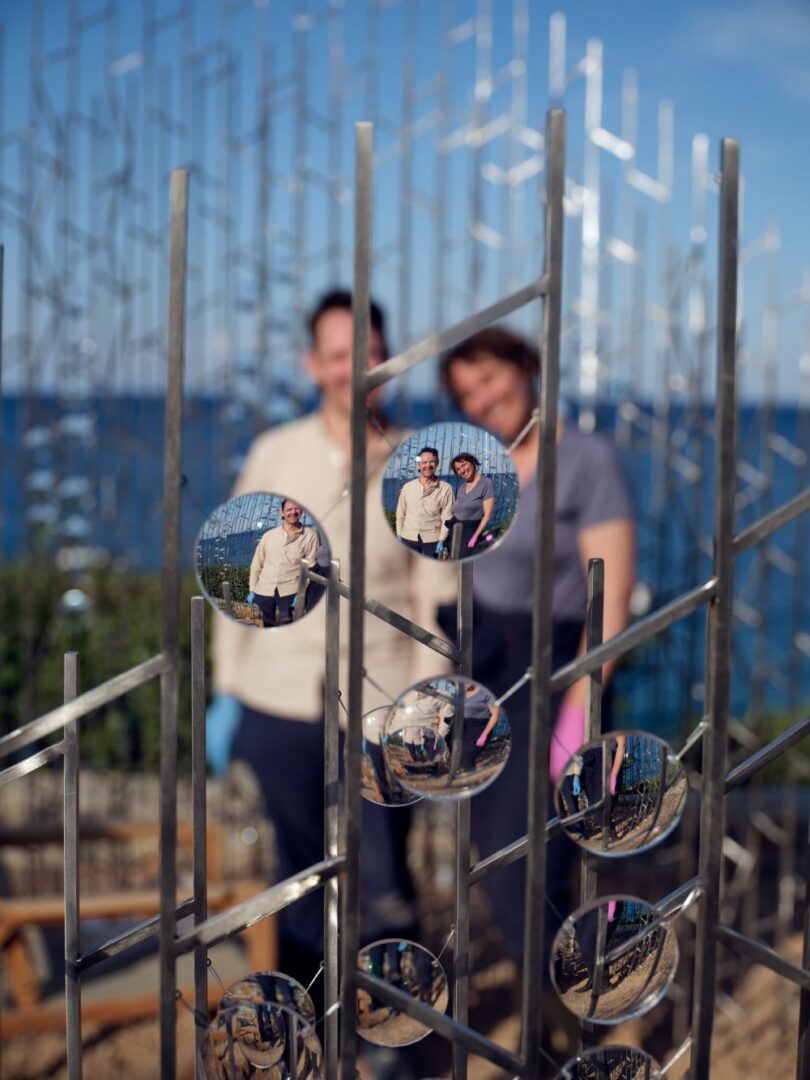
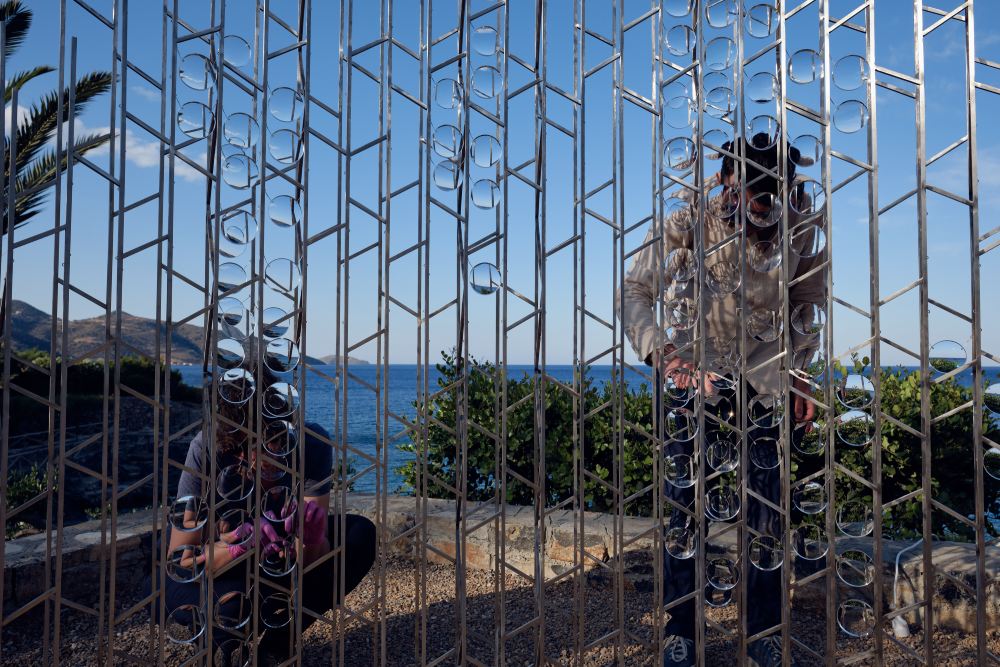
The work will be officially unveiled in early June at a hospitality venue in Agios Nikolaos, transforming the landscape into an active field of experience and perception. Visitors will be invited to move through a complex visual structure composed of lenses and fields of light, where the image is never fixed but constantly shifts, reflecting the movement of both the body and the surrounding environment.
The selection of Chronotopia underscores the Foundation’s ongoing commitment to supporting works that move beyond the traditional exhibition of objects and instead propose new ways of perceiving, engaging viewers in a multisensory and collective experience of space and time.
We met with the Canadian artists to discuss their artistic journey, the significance of the G. & A. Mamidakis Foundation Art Prize, and the work that will be installed at a bluegr Hotels & Resorts property in Agios Nikolaos.
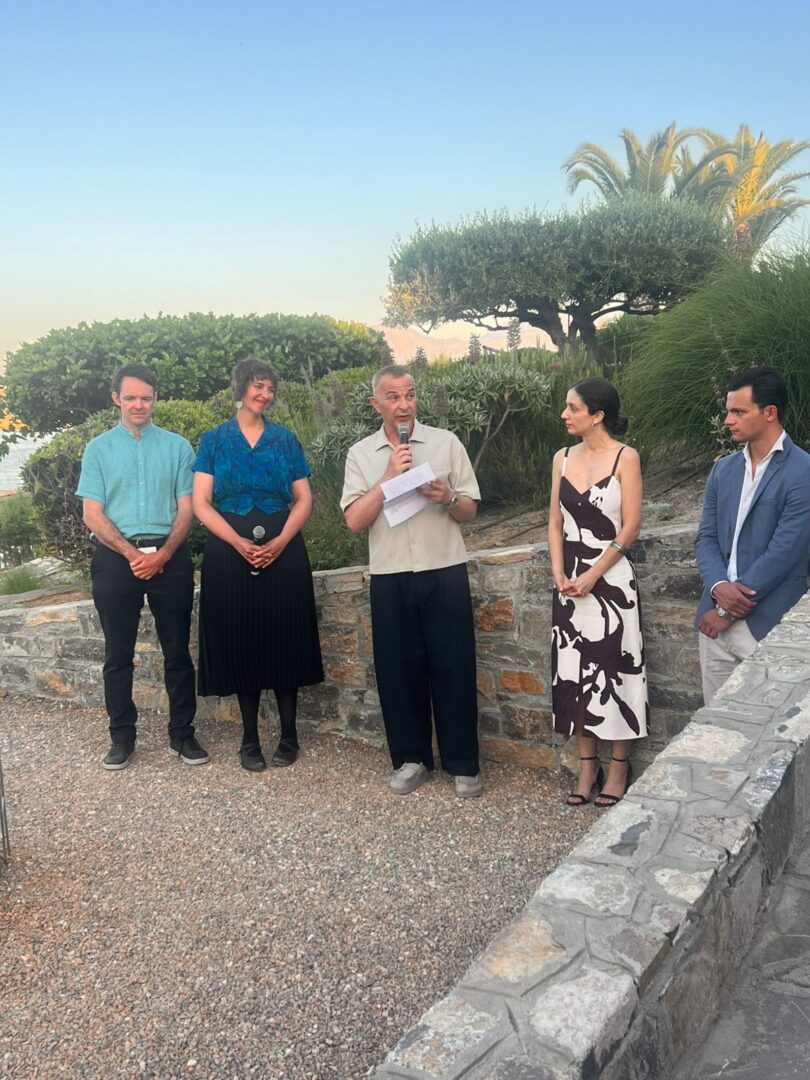
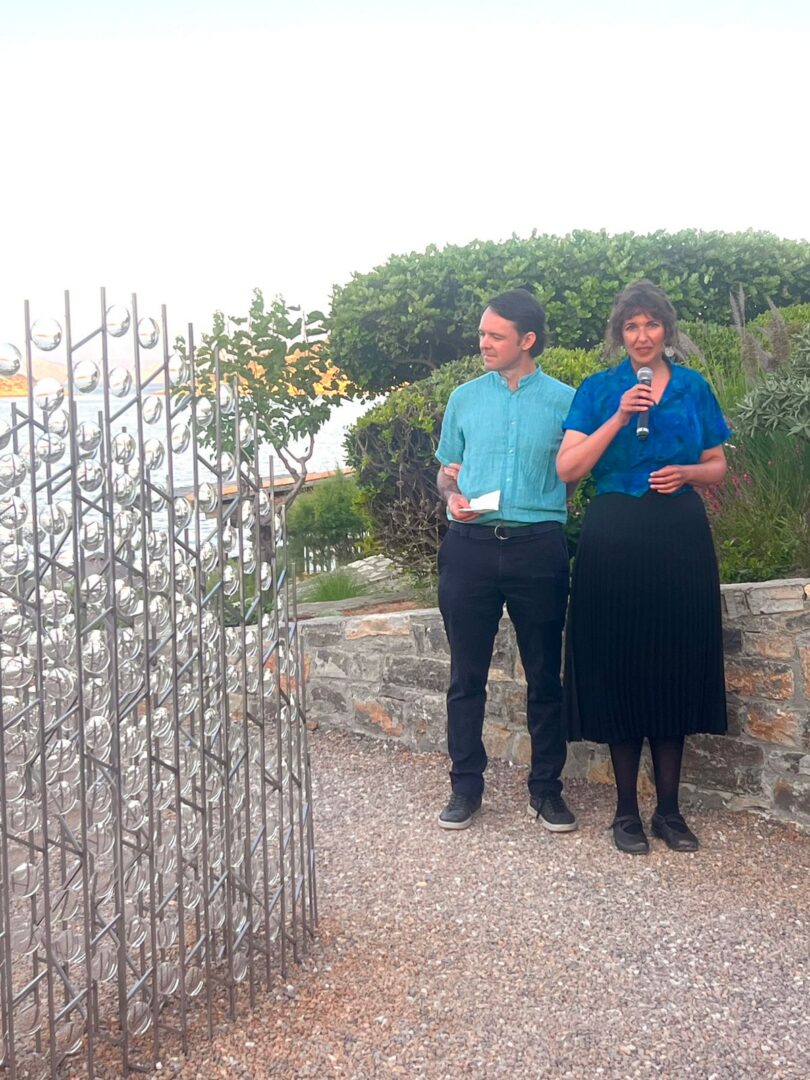
The Canadian artists Caitlind Brown & Wayne Garrett, winners of the G. & A. Mamidakis Foundation Art Prize 2026 with Chronotopia
On Their Artistic Practice
-Caitlind and Wayne, how would you describe your artistic journey and evolution as a duo?
-We have been collaborating for about fifteen years, so in many ways we have grown up together. Our practice has evolved in parallel. We have learned how to disagree creatively, strip away what is unnecessary, and harmonize our voices. We are deeply interested in exploration—of materials, places, and people—and this is reflected in our work. At the core of our practice lies a quiet optimism about the possibilities of human self-awareness.
-What attracts you to working with light and optical materials?
-Light is everything—it is what we see. On a fundamental level, we cannot live without sunlight. Light shapes the way we perceive the world; it is, quite literally, the substance of imagination. Optics allow us to direct it intentionally. At the same time, we are equally fascinated by darkness—the selective vision created through the coexistence of light and shadow. We are constantly seeking new ways to use light to both focus and expand perception.
-How do you balance technical complexity with emotional experience?
-It is challenging when dreams meet reality. We try to exist between those two worlds. We love building, problem-solving, and working with our hands. At the same time, we are fascinated by imagining impossible worlds and new ways for audiences to interact with art. The better we understand the technical aspects, the more freely we can dream. And the more we allow the dream to guide technical decisions, the more flexibility we discover. Maintaining that balance is essential.

About Chronotopia
-What was the original idea behind Chronotopia?
-Chronotopia connects time with place. We were interested in the concept of “space-time” as experienced within a specific environment. The work was developed in response both to the site and to the act of seeing itself. The blue horizon line functions as a record of linear time, while the lenses interrupt that continuity, allowing time and space to meet within the viewer’s gaze.
-Why did you choose myopic lenses as the primary material?
-We have been working with vision lenses for quite some time. Myopic lenses enable distance vision and come in different corrective strengths, reflecting the vision of many different people. As a result, viewers see through multiple perspectives. Visually, we are fascinated by how these lenses compress the world into small, self-contained spheres—much like human experience itself. Additionally, they do not magnify light, making them safe to use compared to other types of lenses.
-How do you want viewers to feel when experiencing the work?
-From a distance, the work appears as a luminous mystery, like water or pure light. As one approaches, its materiality becomes apparent, and once inside, the world begins to shift. The viewer becomes part of the artwork—simultaneously observer and observed.
-How does the work connect to Crete?
-The project was designed specifically for the island’s landscape and the visual experience of the horizon. Although we had not yet visited Crete, we were familiar with its mythology and history. We began with a romantic perception of the place, allowing reality to gradually reveal itself—just as a lens does.

About the Prize and Greece
-What does the Mamidakis Foundation Art Prize mean to you?
-It is a tremendous honor. Being selected is both a validation of our artistic journey and an important professional opportunity, as this will be our first large-scale permanent installation in Europe. Above all, however, we value the relationships that emerge through experiences like this.
-How important is it for you to create work in a place like Greece?
-Greece is a source of immense cultural heritage. We are interested in discovering its lived reality—the people, the landscape, everyday life—and understanding the complexity of a place that combines history with contemporary experience.
-Has Greek light and landscape influenced you?
-The light and colors of the Mediterranean, especially its blues, have deeply influenced our imagination. Through the lenses, these colors will be refracted and continuously transformed within the artwork.
-What is the role of public, site-specific art today?
-Art in public space acts like a lens that allows us to see a place more clearly. It offers a different perspective and redefines our relationship with the environment around us.
-How does sustainability influence large-scale installations?
-Sustainability is inseparable from art. It concerns both the materials used and the lifespan of a work in relation to its site. A work of art must “converse” with time—either through durability or through its natural decay.
-What do you hope audiences will take away from Chronotopia?
-A moment of stillness, a fresh perspective on space and time, and perhaps a clearer understanding of the world around them.
WHO IS WHO
Caitlind r.c. Brown
Caitlind r.c. Brown is a visual artist, collaborator, and cultural organizer. She graduated from the Alberta University of the Arts in 2010 and received a distinguished alumni award in 2019 in recognition of her artistic achievements. She has founded and participated in numerous collective projects, including WRECK CITY, which organizes experimental art exhibitio
ns in buildings scheduled for demolition.
Together with collaborators, she has developed public art projects such as The Wandering Island, a “slow art” initiative on an island in the Elbow River designed for both humans and animals. In 2019, she created The Hibernation Project, a series of winter arts events that led to a sound-art radio program and a mobile exhibition project presented in automobiles.
Wayne Patrick Garrett
Wayne Patrick Garrett is an artist and musician. He began his career as a Journeyman Machinist, working in Canada before studying jazz at Mount Royal University. He entered the artistic community through a collective living and creative space in Calgary, where he met Brown and began collaborating on films and installations.
Alongside his visual art practice, Garrett performs with various musical groups and has developed a multidisciplinary approach that combines music, technical craftsmanship, and experimental art.