


Interview by Zeta Tzioti
Some artists draw inspiration from reality; others create entire universes. Aris Chantzopoulos, also known as Forvitinn, undoubtedly belongs to the latter category.
A painter, musician, composer, and creator of immersive experiences, he has spent years building a personal world where the dark forests of Epirus meet Scandinavian mythology, pagan figures coexist with dreamlike landscapes, and the energy of nightlife is transformed into ritualistic imagery and sound. His connection to nature, rooted in his childhood years in Ioannina, remains the deepest source of inspiration for both his visual art and music.
On the occasion of his artistic journey between Athens and Berlin, his visual practice, and his musical project Forvitinn, we spoke about the forests that shaped him, the importance of silence in the creative process, the influence of nightlife culture on his work, and his desire to imagine worlds in which humanity reconnects with nature.
-Aris, how did your childhood experiences in Ioannina and your connection with the forests and mountains of Epirus shape your artistic identity?
-I grew up in close contact with the mountains and forests of Epirus. Countless family hikes and excursions into nature were a significant part of my childhood. At some point, I realized that I had developed a particularly strong connection to those landscapes—perhaps stronger than those around me.
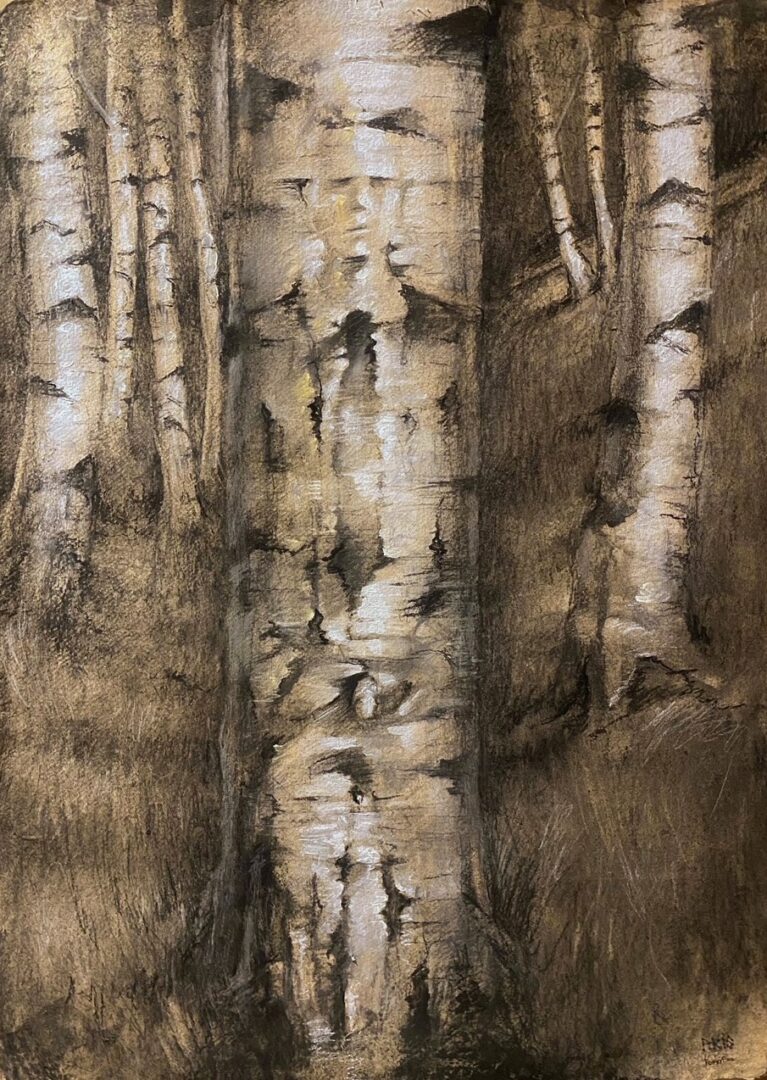
Whenever I entered a forest, especially the dark woodlands of Eastern Zagori with their towering black pines, I felt as if I were stepping into another world, something almost mythical and fairy-tale-like. It was a kind of pilgrimage; at least that’s how my parents jokingly described it.
That deeply personal connection with nature shaped me profoundly and gave me the urge to share those feelings through my work. Even today, it helps me connect with something greater than everyday life.
-Natural and urban elements seem to coexist in your work. What does this ongoing coexistence—or tension—between the two worlds represent for you?
I don’t actually feel that there is anything particularly urban in my work. There is, however, something deeply human—something man-made in terms of atmosphere and feeling. Everything comes from my own life and experiences.
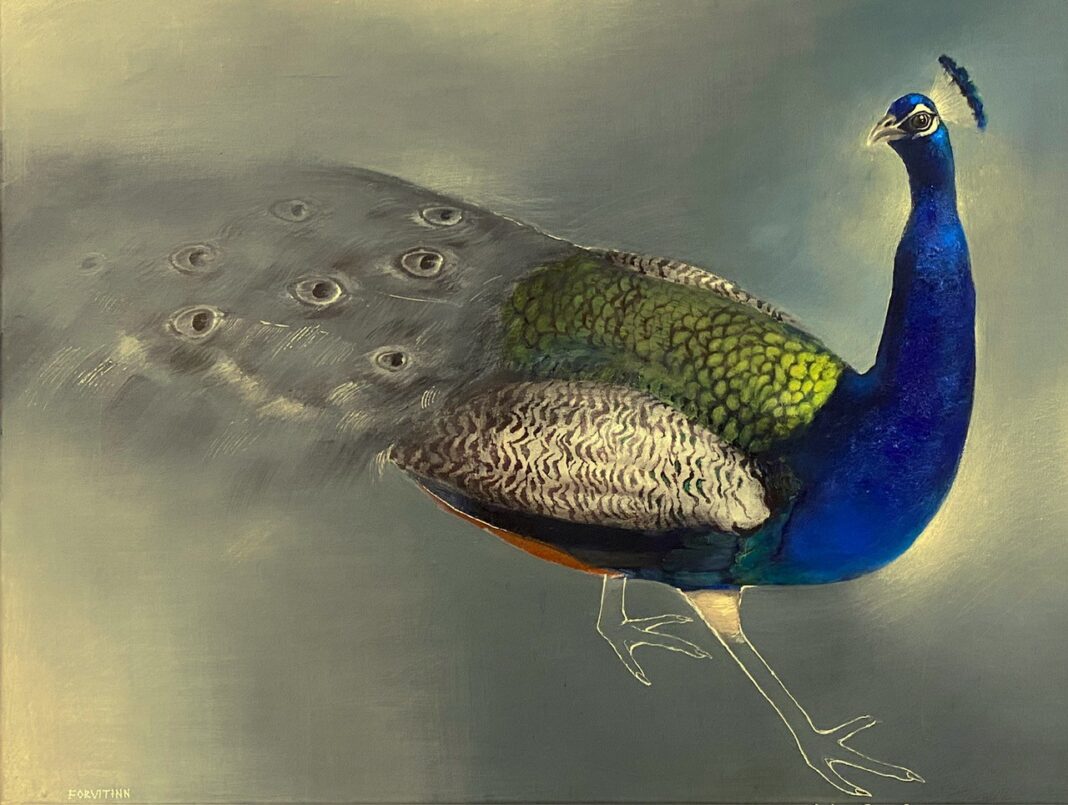
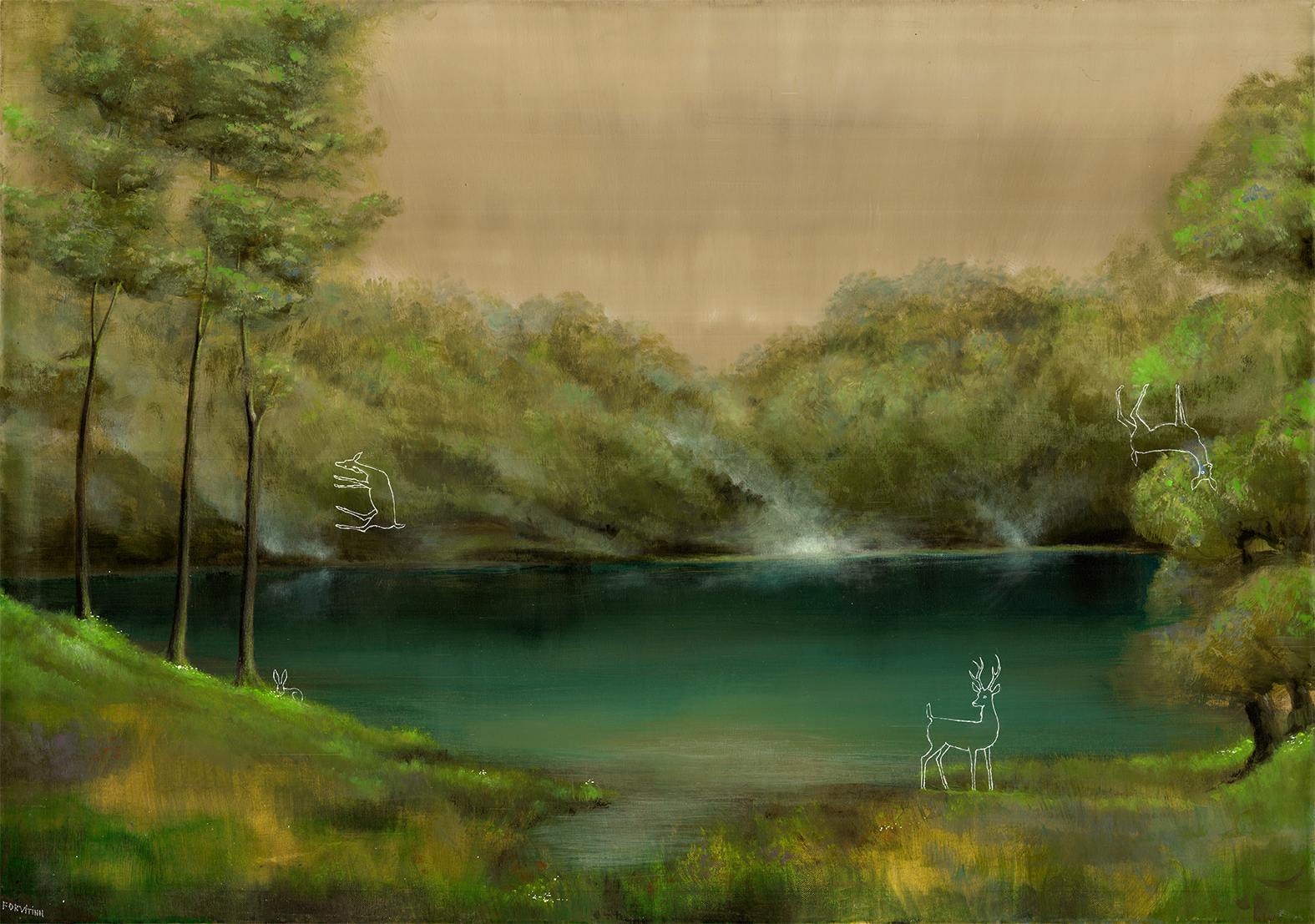
Nightlife, techno music, club culture—those influences inevitably find their way into the landscapes I create. Nature always remains the dominant presence, whether I am depicting places I have experienced firsthand or places I have imagined. I am also often inspired by animals, which I love to paint.
Rather than seeing a conflict between these worlds, I see an attempt to reconcile humanity and nature.
-The hybrid creatures and figures that appear in your paintings seem to belong to a dreamlike realm. Where do these images come from?
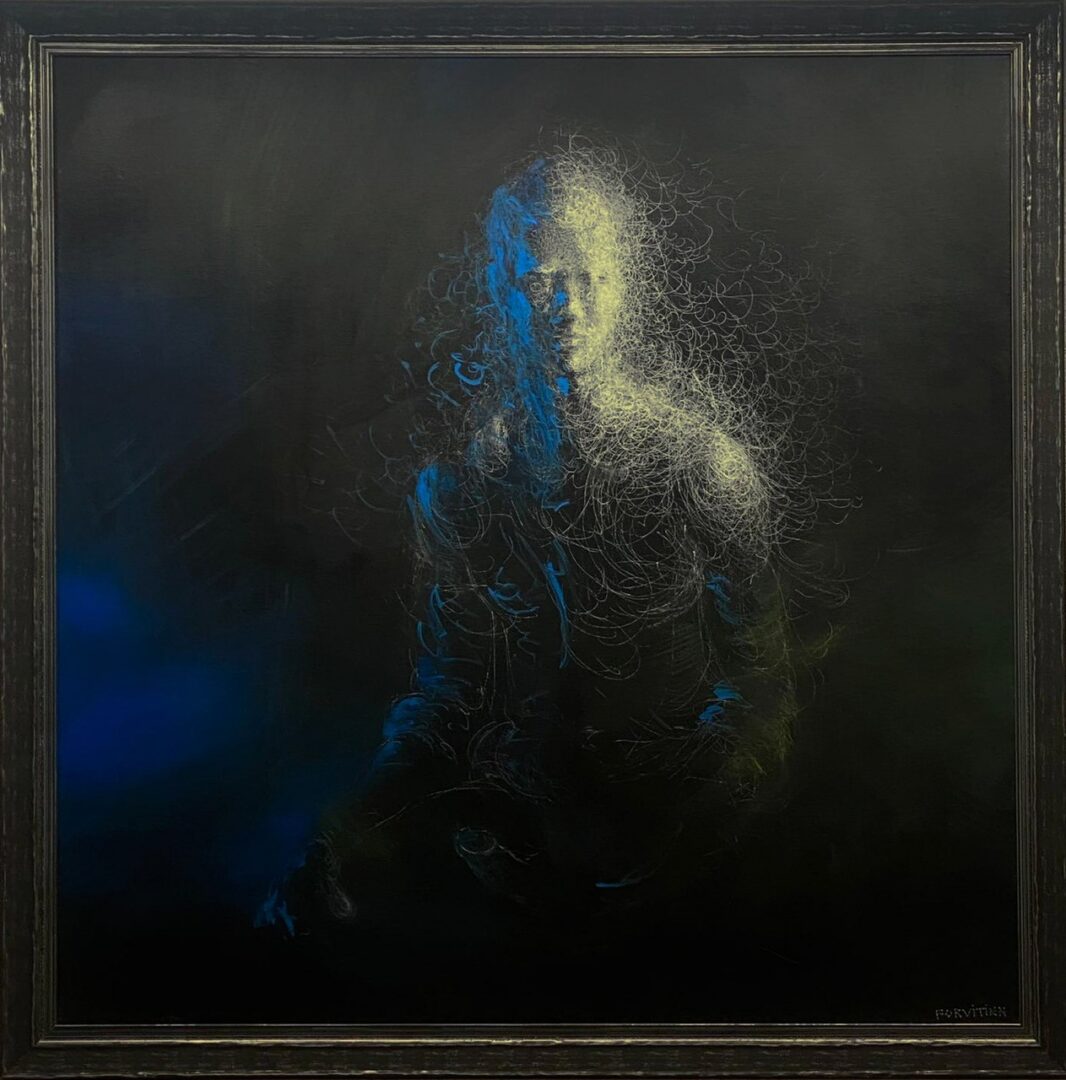
-In many ways, I transfer experiences from urban life into a parallel world where human beings, as we know them, do not exist. To belong there, they need to transform, merge with other beings, become something else.
These figures emerge quite intuitively. They often carry a pagan quality and are frequently hybrids of human and animal forms, influenced at times by Scandinavian mythology and at others by Ancient Greek mythology.
I am fascinated by the idea that humans are not as disconnected from nature as we tend to believe. Perhaps that is why my figures seem to belong to both worlds at once.
– What role does music play in your painting process—and vice versa? Is there a common core connecting the two forms of expression?
Music is incredibly important to me. One medium constantly feeds the other.
Over the years, people have described me as a musician, painter, sculptor, graphic designer, or DJ, but I have never felt the need to define myself through a specific title. For me, the creative process is essentially the same regardless of the medium.
That is why, in many of my exhibitions, I have tried to create complete audiovisual environments, allowing viewers to immerse themselves fully in the world I have created.
-Your project Forvitinn has a distinctive, almost cinematic atmosphere. What are your main musical influences?
-I am deeply drawn to a certain sense of rawness in music, but also to orchestral and minimalist ambient works, as well as choral music.
I grew up listening to artists associated with Warp Records, such as Boards of Canada and Autechre, while also being heavily influenced by bands like Sigur Rós and by classical music. I have a particular love for instruments such as the piano and cello, both of which feature prominently in my own compositions.
I am always interested in the coexistence of the dreamlike and atmospheric with something more intense, primal and emotionally charged.
-You have collaborated with renowned artists and companies such as Gyða Valtýsdóttir and Constanza Macras. What do you value most from those collaborations?
-What I value most is the trust these artists placed in me—especially people I already admired before working with them.
Constanza Macras, for example, gave me complete freedom to experiment and contribute something genuinely personal to her project. Gyða Valtýsdóttir performed cello and vocals on one of my piano compositions, while Ruxpin welcomed me into his label and played an important role in mastering my work.
Those collaborations helped me grow creatively and encouraged me to trust my own artistic voice more deeply.
About the Artist
Aris Chantzopoulos (Forvitinn) was born in Ioannina, Greece, in 1982. His connection to the forests and mountains of Epirus, as well as later experiences with the landscapes of Central Europe, has been a constant source of inspiration and a defining element of his artistic practice.
As a visual artist, he has presented work in solo and group exhibitions in Athens and Berlin, as well as at events and festivals including Synch Festival, the Thessaloniki International Film Festival, Med Curare Art Movement in Malmö, Sweden, and the Skopje Biennale 2009.
Alongside his visual art practice, he creates music under the name Forvitinn, composing for theatre and dance productions while also releasing his own work. His music combines electronic textures with acoustic instruments such as piano and cello, and has been presented at venues including Schaubühne Berlin, Suicide Circus Berlin, BIOS and Six D.O.G.S. He has released music through the Icelandic label Raftonar Records and collaborated with artists such as Gyða Valtýsdóttir (Múm), Ruxpin and Constanza Macras.
For many years, he was an active member of the underground electronic scenes of both Athens and Berlin as a DJ and event organizer, an experience that has deeply influenced both his musical and visual work.
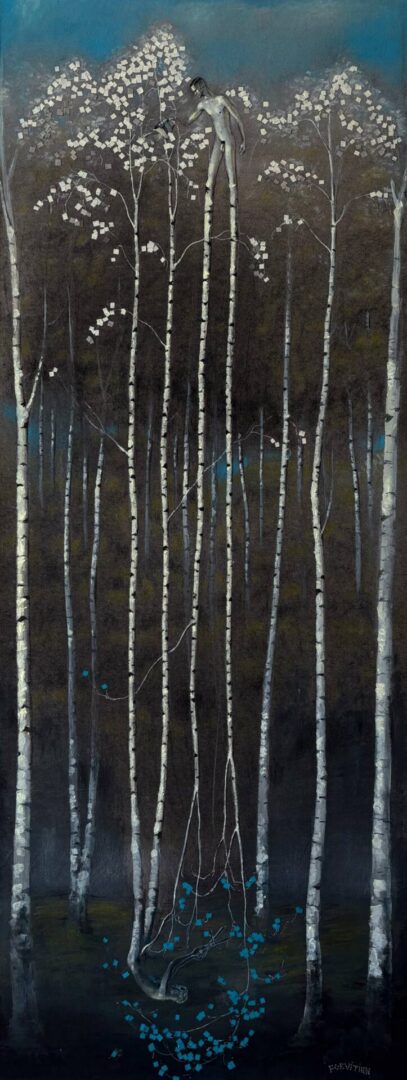
His paintings are populated by hybrid figures inspired by Ancient Greek and Scandinavian mythology, set within forest and waterside landscapes. His work moves between nature, myth, night culture and collective experience, blending romantic, dark and ritualistic elements.
He primarily works with acrylics, charcoal and dry pastels, while also experimenting with sculpture using clay and porcelain.


)