



Nikos Engonopoulos (1907–1985) stands among the most influential figures of twentieth-century Greek art, a painter and poet whose work defined the local articulation of Surrealism and shaped the course of modern visual culture in Greece. A leading voice of the so-called Generation of the ’30s, Engonopoulos forged a distinctive visual idiom that merged avant-garde experimentation with references to Byzantine iconography, ancient mythology, and contemporary Greek identity.
Educated in Athens and Paris, Engonopoulos absorbed European modernist currents while remaining deeply anchored in Hellenic tradition. His paintings often feature enigmatic figures, theatrical spatial constructions, and bold chromatic harmonies, evoking dreamlike narratives where mythological heroes coexist with modern archetypes. This synthesis of the surreal and the historical became a defining characteristic of his oeuvre, offering a poetic reimagining of Greek cultural memory through the lens of international modernism.
Engonopoulos’ significance for Greek art lies not only in stylistic innovation but also in conceptual liberation. At a time when academic realism still dominated the local scene, he introduced a radically personal language that embraced imagination, symbolism, and subconscious association. Through this approach, he helped establish Surrealism as a vital chapter in Greek modernism and opened pathways for subsequent generations of artists seeking to reconcile global avant-garde movements with national cultural narratives.
His reputation extended beyond painting into literature, where his surrealist poetry further reinforced his interdisciplinary impact. Yet it is the visual dimension of his work — monumental compositions populated by statuesque figures, architectural fragments, and mythic references — that continues to captivate collectors and institutions alike.
The international auction market reflects this enduring appeal. A landmark example is the monumental 1938 painting Scène homérique avec le héros / Episode from the Trojan War, measuring 125.5 × 130.5 cm. Presented at the Venice Biennale in 1954 — where Engonopoulos became the first Greek artist to hold a solo exhibition — the work achieved a record price at a 2020 London sale by Bonhams, reaching £682,759 (approximately €763,890), significantly exceeding its estimate.
Such results illustrate broader trends in the artist’s market trajectory. Engonopoulos’ historical importance and distinctive surrealist vocabulary have generated sustained international demand, with major works frequently surpassing pre-sale expectations. Collectors are drawn not only to the rarity of large compositions but also to their emblematic role within the narrative of European Surrealism.
Today, Engonopoulos remains a cornerstone of Greek modern art — an artist whose imaginative synthesis of myth, memory, and avant-garde experimentation continues to resonate aesthetically and economically. His paintings function as cultural bridges between antiquity and modernity, while their auction performance confirms his status as both an art-historical milestone and a sought-after presence in the global market.

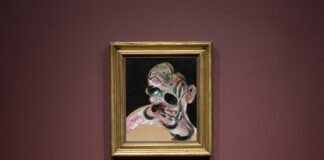
 stands among the most influential figures of twentieth-century Greek art, a painter and poet whose work defined the local articulation of Surrealism and shaped the course of modern visual culture in Greece. A leading voice of the so-called Generation of the ’30s,)