

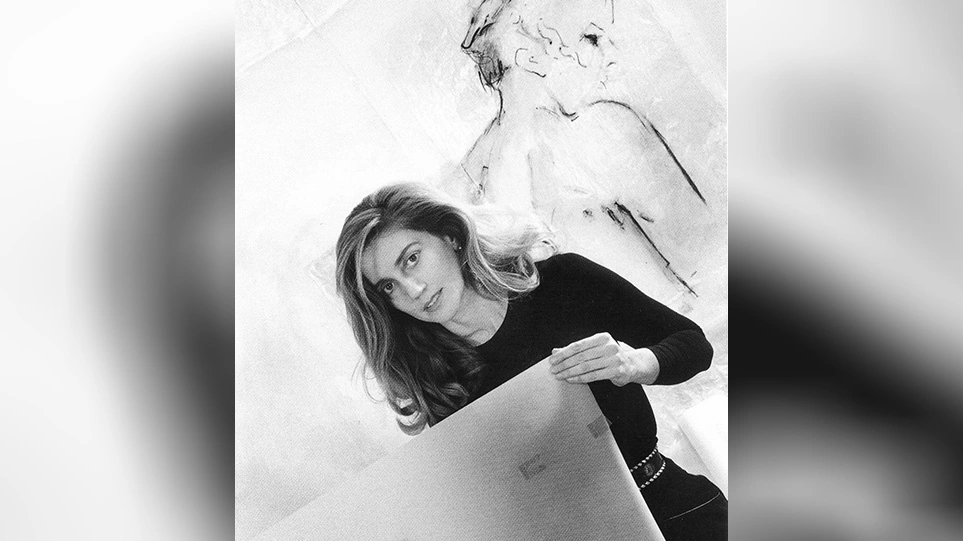
By Zeta Tzioti
Inspired by the philosophical thought of Epicurus and the timeless quest for happiness, visual artist Erietta Vordoni presents the exhibition “The Garden of Epicurus” at the Athens Concert Hall, from March 30 to June 30, curated by art historian Thodoris Koutsogiannis.
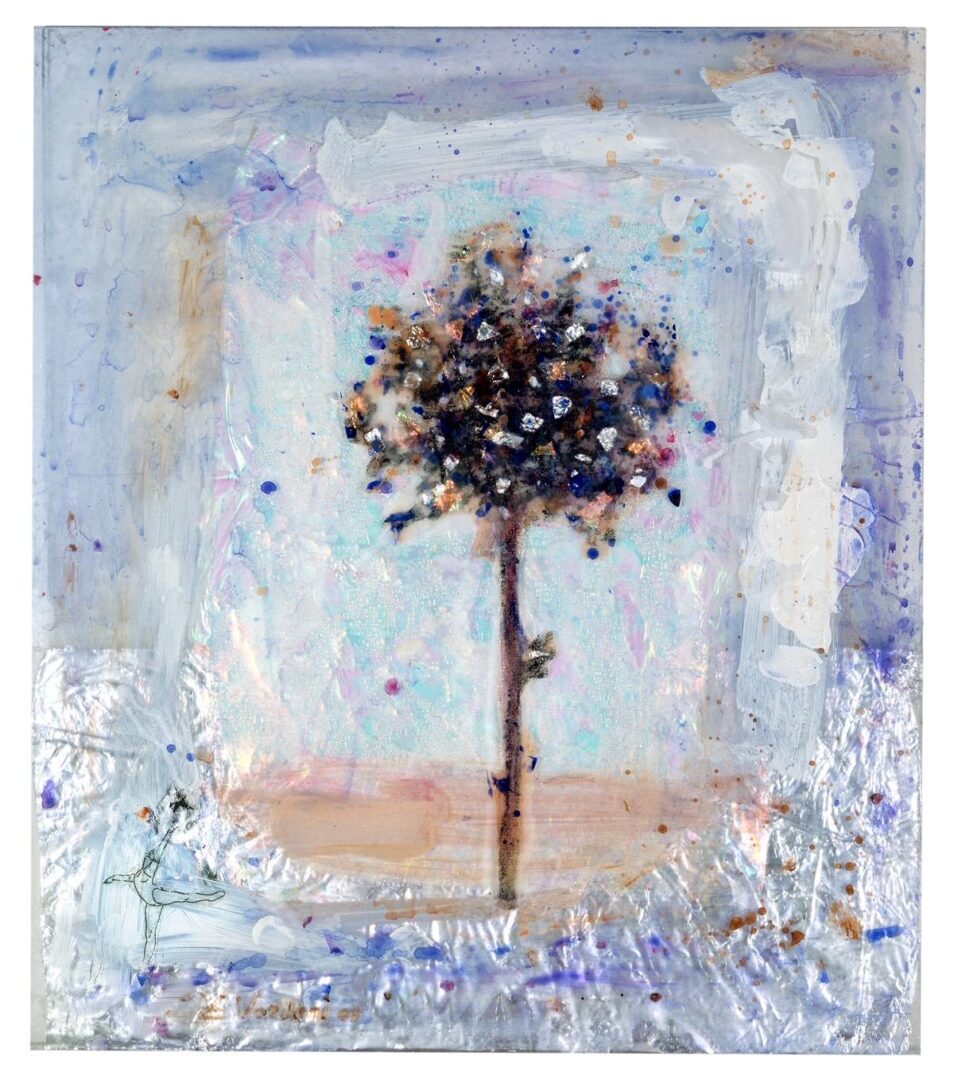
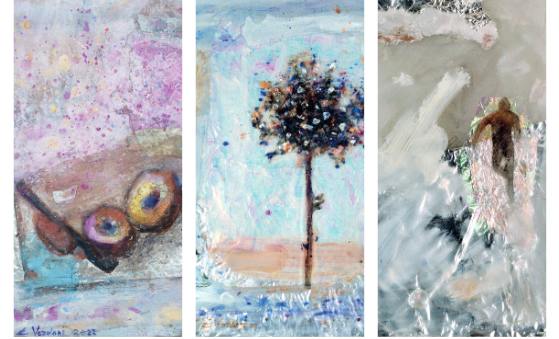
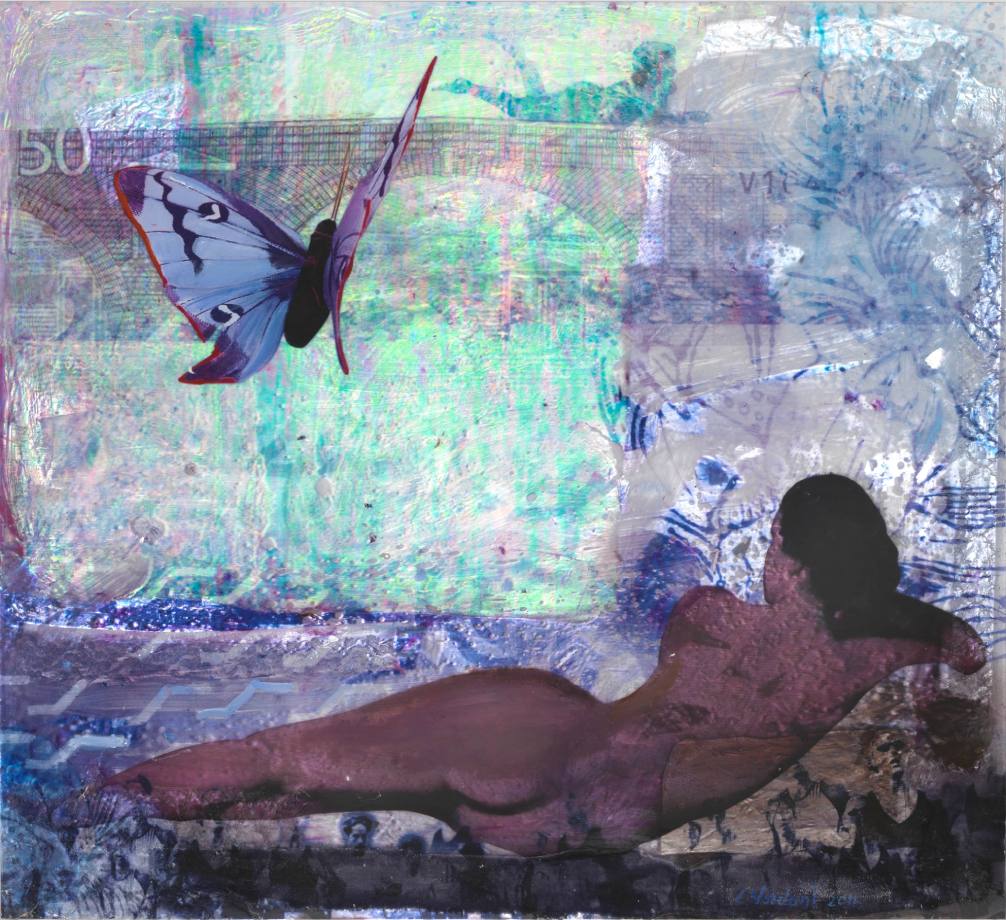
The exhibition brings together a series of works that explore the relationship between the material and the immaterial, light and transparency, while highlighting the profound philosophical dimension of the artist’s creative practice. Through the use of contemporary materials such as plexiglass and multi-layered pictorial surfaces, the works create the sensation of a space that breathes, where light, color, and movement interact with the viewer’s inner experience.
Drawing inspiration from Epicurus’ famous “Garden” — a place of philosophical reflection, simplicity, and spiritual freedom — Vordoni proposes a visual journey that invites visitors to discover their own personal garden: a space of inner balance, contemplation, and harmony in a world of constant transformation.
On the occasion of the exhibition, the artist speaks about her sources of inspiration, the relationship between philosophy and art, and the need to seek happiness and inner serenity through artistic creation.
-Erietta, how did the idea for this body of work originate?
-Since I was young, I have enjoyed making connections and exploring the “how” and the “why” — looking deeper beneath the surface. We are living in a time marked by a decline of values, economic crisis, and wars; there is a widespread sense of insecurity and a lack of trust.
I began to wonder which historical period might resemble our own. My studies in the Philosophy of Art at the Sorbonne helped guide this search. I realized that a similar crisis occurred after the death of Alexander the Great in 323 BC, when the known world was undergoing major upheavals.
It was during that time that the philosopher Epicurus appeared, establishing his school in a beautiful garden in the Kerameikos area of Athens, known as the “Garden of Epicurus.” The school was open to everyone, regardless of gender or origin. There he spoke about happiness through honesty, justice, simplicity, friendship, and respect for nature.
-How much did this philosophy influence you?
-The philosophy of positive thinking as a path to happiness has deeply influenced me. I want my works to carry an energy that functions in a liberating and even healing way for the viewer.
-What are you presenting in this exhibition?
-I present a series of 48 works, both small and large in scale. The challenge for me was to convey the positive emotions suggested by Epicurus without repeating myself, so that the viewer can truly feel and experience them.
-Why did you choose plexiglass as your primary material?
-I feel that everything around us exists in a fragile balance, as if suspended — ready either to be reborn or to dissolve. That is why I work on transparent plexiglass, on what I call a kind of “condensed air,” which conveys the sense of suspension that characterizes our era.
-How does this material function within the space?
-This sense of “compressed air” is expressed through the transparency of the works, which are painted on both sides, front and back. Often the viewer has the impression that the artwork is breathing within the space.
-Blue dominates your work. What does it mean to you?
-Blue is, first of all, a color of memory, because it prevails in the landscape of our country. It is a color that takes you on an inward journey and calms you. I believe it is the color of inner silence.
-What would you like viewers to feel when they stand in front of your works?
-I try to be as direct and sincere as possible with my work. I activate it because I live it and believe in it. I hope the viewer will receive this positive energy and enter their own inner garden.
-What is the symbolism of the sky in your works?
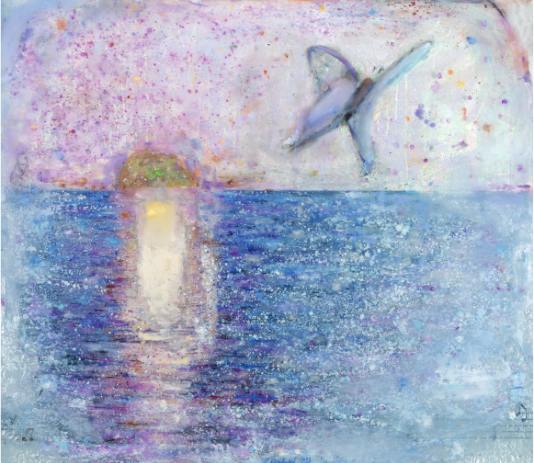
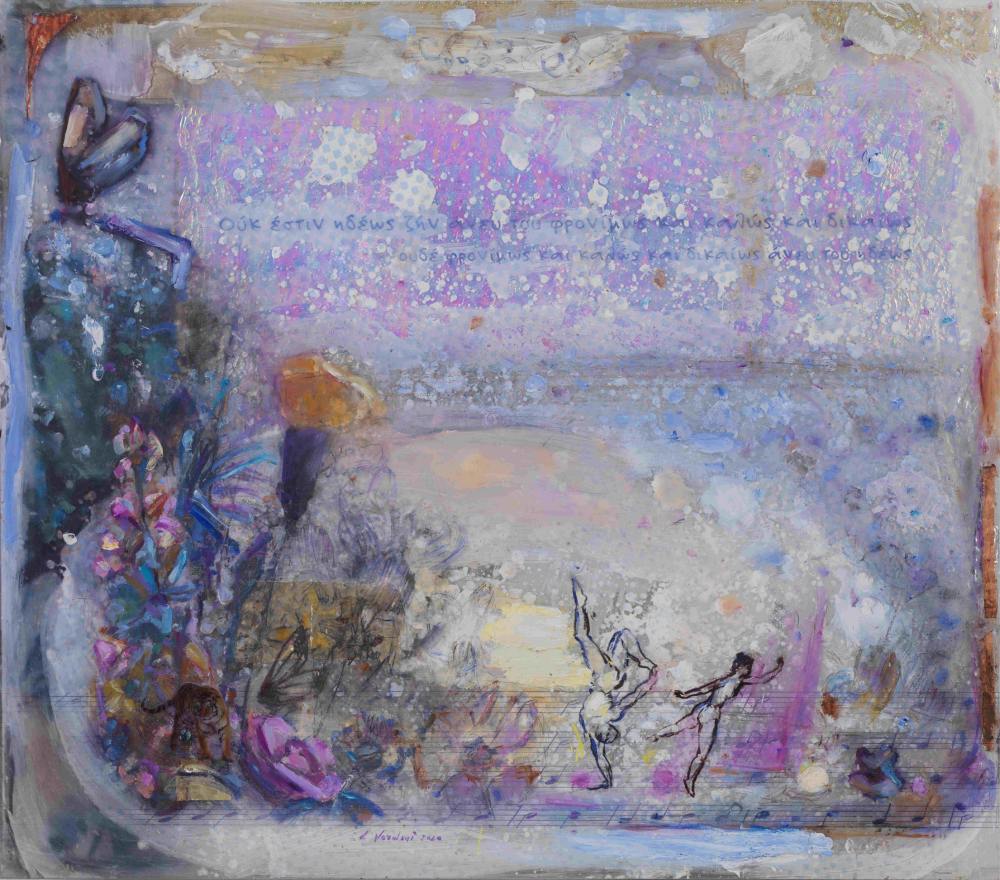
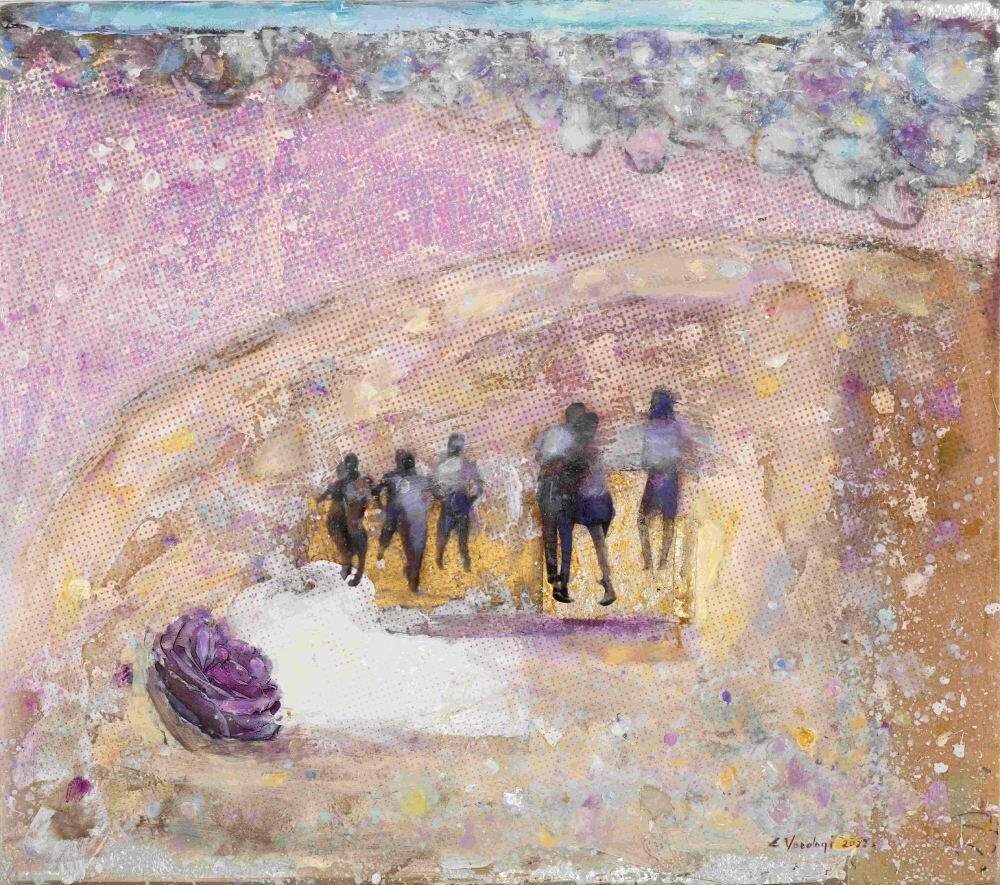
-The sky represents a personal goal that helps us pursue happiness. In trying to reach it, we often transcend ourselves, functioning through both the conscious and the unconscious.
-There is a strong sense of balance and contrast in your work.
-Life is a journey in which contrasts make it more interesting and meaningful. If you think about it, it becomes an allegory for the balance of our own lives.
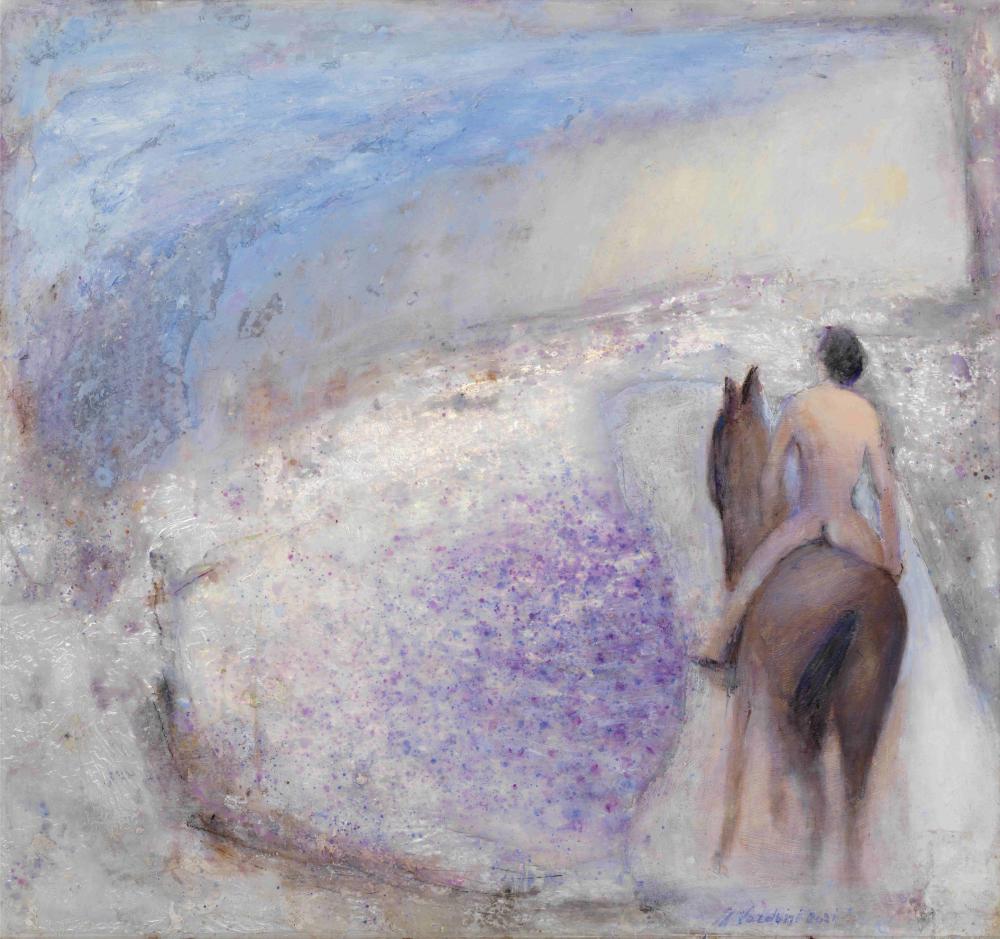
-The horse appears frequently as a symbol in your work. Why?
-In our tradition, the horse is considered a symbol of luck and strength. It helps us gallop toward the infinite.
-How do you define happiness?
-For me, happiness means harmony and meaningful relationships. Through my painting I try to harmonize shapes, colors, rhythms, and materials so that they create a sense of uplift. I do this because, above all, I need it myself.
-We live in a world of speed and digital communication. How does this influence your art?
-Today we communicate mostly electronically and move at incredible speeds. We may fall asleep in Greece and wake up in America. Everything around us is constantly changing.
Our DNA, however, has learned to function according to the rhythm of the heartbeat and through physical contact and sensory experience. This shift often creates inner tension.
In my work, by using transparent materials, I create a new canvas each time. I attempt to combine the hardness of metal with the softness of velvet, the memory of lace with iridescent enamels that change color depending on the light. By harmonizing these opposites, I propose a balance between our need for physical communication and our new electronic reality.
-How is the relationship between the material and the immaterial expressed in your work?
-It is a deeply experiential relationship. It emerges through the way I process matter, color, textures, and materials in general.
-Many people speak about a Zen dimension in your work. Is this intentional?
-Yes, it is absolutely intentional. Amid the countless problems, uncertainties, and unexpected situations of everyday life, if we see our lives as a journey of experience and knowledge, we can feel fulfilled. I have lived through many difficulties, and I try to manage them in this way.
-How much did Paris and your studies there influence you?
-Paris and my studies there were decisive. My contact with artists from different parts of the world and with different cultures liberated me and encouraged me to give form to my personal visions.
Life is beautiful in its cultural complexity and in the acceptance of others. My ongoing connection with a cultural center such as Paris has enriched me and continues to do so.
-What does the “garden” symbolize in your work?
-The garden is the garden of life. It is a walk through a space full of colors and fragrances, but also traps. If we become aware of them, we can confront them.
Since we do not know when we will leave this world, we should enjoy life fully — with both our minds and our senses.
-How do you see the relationship between art and life?
-Art is life and at the same time its reflection. It contains layers of emotions, experiences, and knowledge. Like life, it also carries signs of wear from which we learn and move forward.
The “garden” of life contains everything — and perhaps that is why it is so fascinating. Art learns from life, and artworks contain it within them.
-What would you like visitors to take away from the exhibition?
-I would like visitors to feel the greatness of life and to understand that, despite the difficulties that may arise, when we learn to accept them we can face them with calmness, strength, and clarity.
In this way, we may discover happiness through our own personal garden and perhap
ERIETTA VORDONI
SOLO SHOW @ Athens Concert Hall
“The Garden of Epicurus”
March 30 to June 30, curated by art historian Thodoris Koutsogiannis.
Vas. Sofias & Kokkali 115 21 Athens
E webmaster@megaron.gr
T +30 210 728 2000, +30 210 728 2333


