


Interview by Zeta Tzioti
Marcelo Ricardo Zeballos is one of the most distinguished and recognized artists in Argentina. His artistic journey includes over 45 solo and group exhibitions in major museums in Argentina, such as the Eduardo Sivori Museum and the Palais de Glace Museum. He began his career as an Art Designer for the Walt Disney musical “Beauty and the Beast” and for MTV Argentina, and collaborated with major companies such as Universal Records and Sony Music. He has also participated in the international Cow Parade in Buenos Aires and the Polo & Art Show.
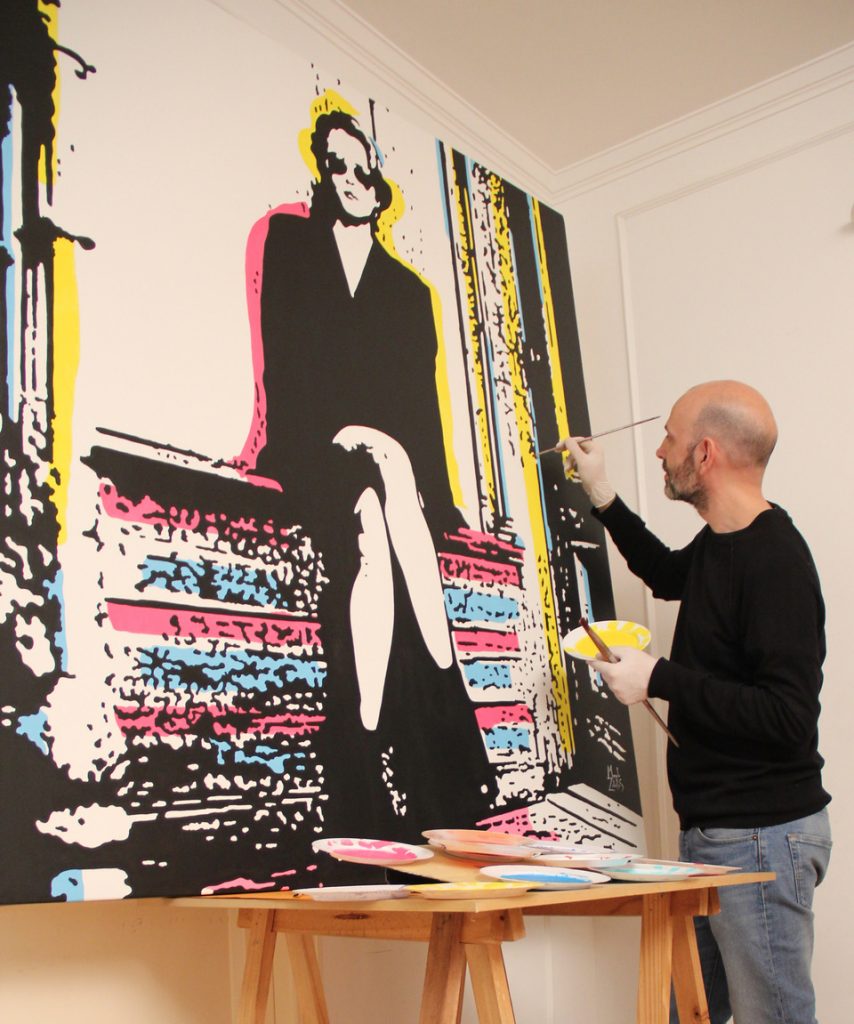
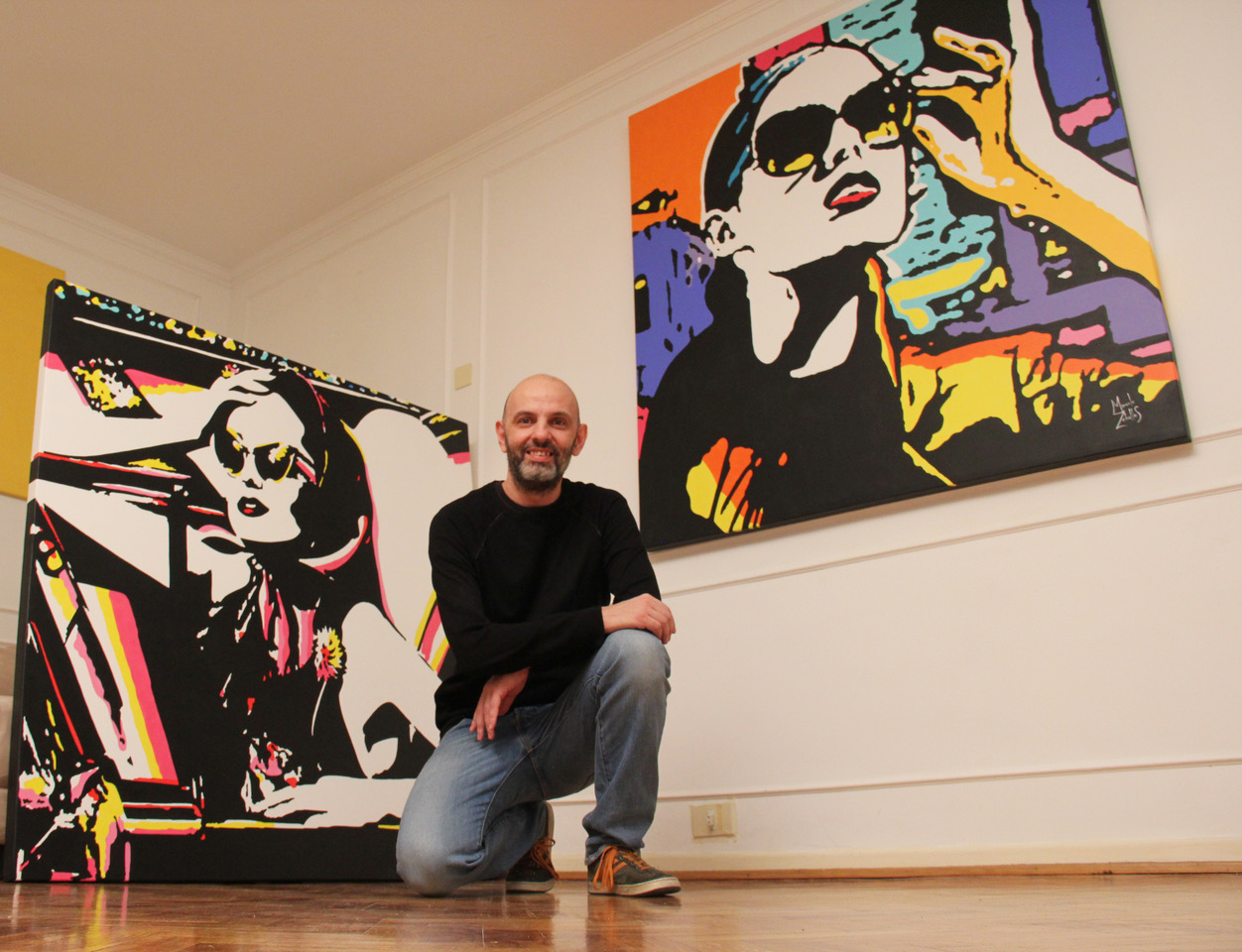
His work is supported by leading artists such as Clorindo Testa, Luis Felipe Noé, and Raul Santana. With a strong influence from the worlds of advertising, photography, cinema, and posters, Zeballos focuses on depicting large-scale forms, with the central theme being the female face.
He uses bold pop colors that highlight the attractive features of the female gender while blending with his modern aesthetic. I met Marcello in Greece at his exhibition at Mamush Gallery.


The artist’s background and his artistic vision
-Marcelo, what inspired you to transition from architecture to painting?
-I hold a degree in Graphic Design from the Faculty of Architecture at the University of Buenos Aires. The university taught me how to think conceptually and creatively, to communicate an idea or emotion, or simply to seduce the viewer through artistic composition.
Architecture also greatly inspired me, as it forms part of our history and conveys an urban language full of symbols. I often use architectural elements in my work to add another layer of narrative meaning.

The female figure in his artwork
-Your works often focus on the female face. What does the female figure represent to you in art?
-The female figure is a recurring presence in much of my work. In my family history, women have always played an important role, and that continues to this day. I hold an epic and poetic vision of women as creators of life, through both existence and artistic creation. In my paintings, the feminine figure symbolizes beauty, dreams, and the power of poetic energy.


Visual and cinematic influences
-How do advertising and cinema influence your artistic style?
-I’m deeply influenced by 1950s cinema, especially its black-and-white tones and high contrast imagery, as well as classic advertising photography, which offers a strong compositional ideal.
The works of Edward Hopper and David Hockney are central references for me — Hopper, in the composition of characters and their own personal spaces, and Hockney in the use of bold and contrasting colors. Sometimes, I see my artworks as part of a larger cinematic narrative.


Creative process
– What is your creative process from the initial idea to the finished work?
-My process begins by creating a composition where the character and their environment have poetic, aesthetic, or theatrical meaning.
Then comes the technical development: drawing, applying black and white tones as absolute values, and finally, the use of color. Often, the black serves as a structural support for the color, like in stained glass. Music — jazz, soul, funk, and rock — is a great influence while I paint. I’m very disciplined when starting a piece, and I try to finish it quickly because I love the feeling of seeing the image fully transformed on canvas.


Commercial and expressive art
-You’ve worked on commercial projects with Disney, MTV, and others. How do you balance commercial art with your personal work?
-My experiences working with Disney, MTV, and in rock album art were incredibly fascinating. I learned a lot and took on major creative challenges. I don’t see a big difference between commercial and expressive art — in commercial art, the creative challenge is practical and communicative; in expressive art, it’s emotional and interpretive.

Exhibitions
-Which exhibition has been the most significant in your career and why?
-It’s a difficult question because I believe every exhibition has its own purpose.
For me, exhibitions are the result of a communicative and expressive journey that culminates in the show itself. They are all meaningful in their time and context. But if I had to highlight one, it would be my first exhibition in Greece, at Mamush Gallery in 2017, titled Women.

Use of color
– What role does color play in your work? How do you choose your palette for each piece?
-Color is dictated by the image itself. I start by drawing in black and white, defining lights and shadows with markers, ink pens, and acrylic paint. Then, the color emerges based on what the image calls for. I use a palette of pastel tones contrasted with pure, intense colors, and aim for a harmonious dialogue between them. Sometimes the color goes underneath the black lines, and other times I like to paint over the black as a form of expressive brushstroke.

About criticism
-How do you respond to criticism, both positive and negative?
-Positive or negative criticism is part of the interactive dialogue between art and the viewer. Art demands critique, opinion, and reflection. When an artist creates, they must understand that their work exists within a context and therefore deserves both positive and negative interpretation.
Creative blocks
-Many artists struggle with creative blocks. Has that ever happened to you?
-I’ve never experienced creative block, because my process comes from impulsive visual stimuli that bring me joy. We are surrounded by images that trigger emotions and inspire poetic expression. I’m passionate about both the creative and technical challenges of making art.
Message to the viewer
-What message or emotion do you hope the viewer experiences when seeing your work?
What I hope the viewer receives from my art is a connection to a moment in their life — a unique, intimate moment, where an interior space or emotional landscape resonates with their own image and memory. I want my work to help activate the emotions contained in their thoughts, just as any artistic discipline can do.

Relationship with Greece
-Would you like to exhibit in Greece again? Maybe in Athens once more?
Absolutely, I dream of returning. Greece is my second home. I have many dear friends there, and my bond with its culture is for life. It was my doorway to Europe, and the love I receive from that beautiful country fills me with happiness and gratitude.
A memorable exhibition
-Would you like to exhibit in Greece again? Maybe in Athens once more?
-I’ve had many beautiful exhibitions, but one had a symbolic and magical effect. It was my show at Mamush Gallery in May 2019, titled Memorable Moments.
The promotional painting, a woman running freely through El Prado, was displayed as a giant mural next to the gallery. It remained there throughout the pandemic. That made me reflect on how a simple poetic image can activate our awareness and hope.
A dream: Athens
-Is there another place in Greece where you would like to exhibit your work?
-Any place in Greece would be an epic adventure for me. But returning to exhibit in Athens would be especially wonderful — I love that city deeply.
Milos, a dream to fulfill
-What do you think about the idea of exhibiting on a Greek island like Milos, known for its beauty and unique light?
-It would be wonderful to discover the island of Milos, and to present an exhibition there would be an incredible adventure. The island’s light could bring a unique magic to the work, turning the whole experience into something truly unforgettable


