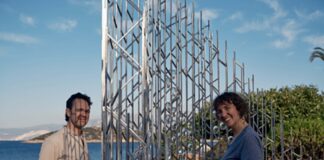
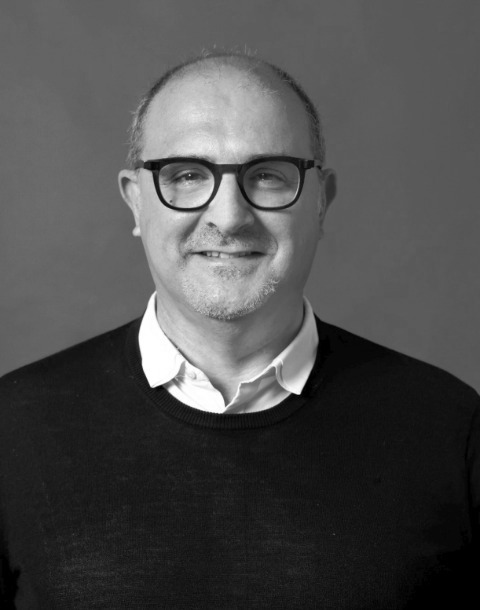
Sharon Toval is a contemporary art curator and researcher with an international presence, whose practice is shaped by multicultural experiences. With roots in France, he has worked across Europe and the Middle East, focusing on fostering dialogue between diverse artistic and social contexts.
His work explores issues of identity, cultural transition, and geopolitical narratives, while also examining the role of institutions and artistic ecosystems in shaping contemporary art. In the United Arab Emirates, he has been associated with initiatives such as the Al Qasimi Foundation, actively contributing to the development of the local art scene through the transfer of curatorial knowledge and international practices.
At the same time, he teaches Exhibition Management in the postgraduate program of Art History and Archaeology at Sorbonne University Abu Dhabi, participating in the education of a new generation of art professionals.
His thinking and curatorial approach are central to contemporary discussions of the relationship between the local and the global, as well as to the role of art as a tool of cultural diplomacy.
His statements in this interview serve as a valuable resource for artists and curators seeking to understand the dynamics and prospects currently shaping the Middle East, highlighting the opportunities emerging within a rapidly evolving artistic landscape.
The Gulf as the new laboratory of cultural power: patronage, soft power and the post-Western art world
-Are the Gulf states becoming cultural colonies of Western art, or are they learning its mechanisms to replace it?
-Over the last 15 years, my international curatorial activities have led me to research zones of tension, where histories, power structures, and identities collide. Through exhibitions in Europe, the Middle East, and the U.S., I use the exhibition space as a site of negotiation between center and periphery, heritage and global contemporary language, visibility and erasure.
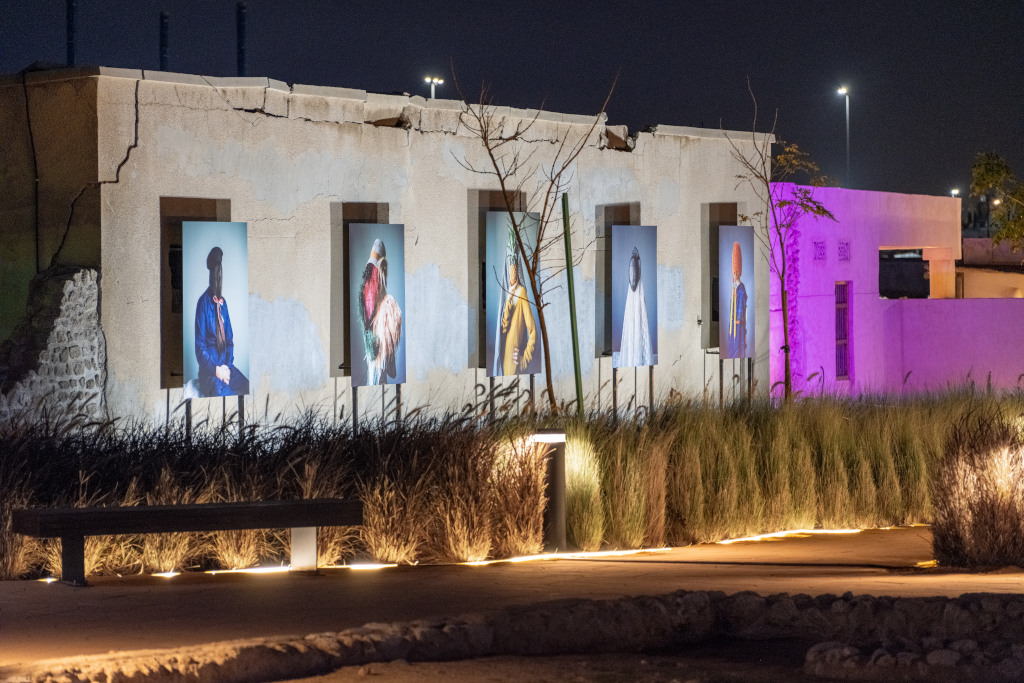
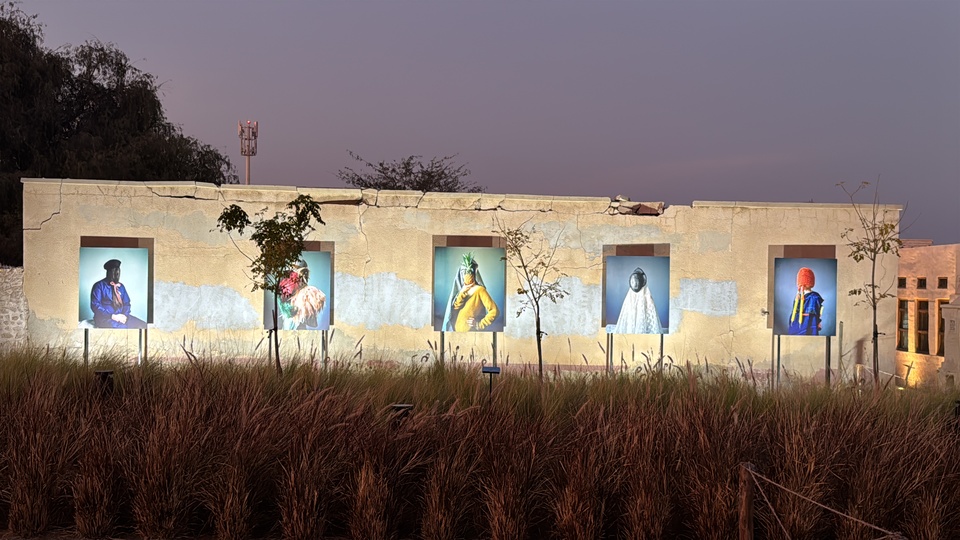
This has brought me to work with the Al Qasimi Foundation for Policy Research in Ras Al Khaimah, since 2021, where I curate exhibitions as part of the annual Ras Al Khaimah Art Festival and lately the first edition of the Ras Al Khaimah Art Biennale: “Civilizations: Under the Same Sky”. My exhibitions there explore tensions between local heritage and global contemporary language, where contemporary and often technologically driven artworks coexist inside historically and culturally charged environments, such as heritage architecture and traditional urban fabrics (Al Jazeera Al Hamra Heritage Village). By placing installation, video, and AI‑related works in dialogue with local histories, I wanted to ask how different civilizations coexist in the present: not as a linear narrative, but as overlapping temporalities and competing imaginations of the future.
My vision of the cultural and artistic activities in the UAE permits me to envision the Gulf states in general as both importing Western cultural models and actively adjusting them for the local own social, economic, and geopolitical purposes. By licensing major Western brands and formats, “universal” museums, biennales, art fairs, and blue‑chip auction circuits, they appear, at first glance, as cultural colonies of Western art, reliant on its canons, advisors, and display logics. In this sense, much of what we see can be read as a soft‑power extension of Western modernity; European and North American narratives are re-staged in spectacular new architectures, often in contexts where local publics have limited space for dissenting cultural voices.
At the same time, those very mechanisms are being learned, internalized, and strategically repurposed. Gulf institutions are rapidly becoming producers of their own canons, collecting and exhibiting Arab modernism and contemporary regional practices, foregrounding Gulf histories and epistemologies, and framing themselves as mediators and historiography leaders rather than mere recipients of “global” culture.
Curators, collectors, and policy‑makers in the region increasingly articulate an explicit ambition to shift the art‑historical and institutional center of gravity eastwards. So, the question is not “colony now, replacement later,” but a more complex present, Western art structures function as a transitional operating system, while Gulf actors’ experiment, sometimes subtly, sometimes very visibly, with provincializing Western centrality and authoring new, region-driven definitions of what counts as global art.
Toval’s personal entry point
Starting from your lived experience in the United Arab Emirates:
-You have been curating in the UAE since 2021. What immediately struck you about the art ecosystem there compared to Europe or Israel?
-What we call today the “ecosystem” of the art world is an extension of the notion of the Artworld, first articulated by Arthur Danto in his seminal 1964 essay The Artworld, published in The Journal of Philosophy. Danto argued that what makes something art is not its inherent aesthetic qualities, but its recognition within an institutional and interpretive framework, a network of critics, curators, collectors, galleries, museums, and historians who collectively produce meaning. This institutional and discursive network is what we now often describe as the art ecosystem.
In addition to my curatorial work in the Emirate of Ras Al Khaimah, I recently began teaching Exhibition Project Management in the master’s program in Art History and Archaeology at Sorbonne University Abu Dhabi. Some of my students were already active in the art field, and some have interned in galleries and cultural institutions, gaining first-hand experience of this ecosystem in practice.
What is particularly striking about the UAE art scene is its diversity. Each Emirate has developed its own cultural identity. At times, they seem to compete, and at other times, they complement one another.
Dubai is largely driven by internationally established commercial galleries such as Perrotin, Leila Heller Gallery, Isabelle van den Eynde Gallery, and Carbon 12, among others. It also hosts Art Dubai, which plays a central role in the regional art market.
Abu Dhabi, by contrast, is defined by its major institutional projects. The Louvre Abu Dhabi has become a landmark museum in the region, and the Guggenheim Abu Dhabi is scheduled to open on Saadiyat Island. Cultural spaces such as Manarat Al Saadiyat further contribute to the Emirate’s institutional profile. Another major development in Abu Dhabi’s art calendar concerns its flagship art fair. For nearly two decades, Abu Dhabi Art, first launched in 2007, has been a cornerstone of the UAE’s cultural scene. Beginning in 2026, it will be replaced by Frieze Abu Dhabi, marking the first edition of Frieze in the Middle East and signaling a new phase in the Emirate’s integration into the global art market.
Sharjah has positioned itself differently, focusing on non-profit institutions and critical contemporary discourse. The Sharjah Art Foundation and the long-established Sharjah Biennial, founded in 1993, are internationally recognized platforms for research-driven contemporary art.
Ras Al Khaimah has historically had a more locally oriented cultural scene.
Through my work with the Al Qasimi Foundation, we have been introducing international contemporary art practices and curatorial methodologies, contributing to the Emirate’s emergence as a new cultural actor. RAK is gradually positioning itself within the broader contemporary art landscape of the UAE. On another note, RAK Art Festival places a strong emphasis on democratizing the arts to less privileged crowds through its educational programs for schools during the Festival each year.
One key difference between the UAE and cities such as New York, Berlin, London, Paris, Athens, or Tel Aviv is the relative absence of a strong alternative scene, meaning non-profit galleries, artist-run spaces, and curator-led independent initiatives. In many global art capitals, these alternative spaces function as experimental laboratories and engines of artistic innovation.
In the UAE, this layer of the ecosystem is still in the process of developing. Taken together, each Emirate represents a distinct ecosystem, yet collectively they form a unified national cultural landscape. Another difference, probably due to the early stage maturity of these art scenes in the UAE, is that all these institutional ecosystems are still not translating into helping the next generation or those less privileged to appreciate art. There is still a lack of programs in schools and qualified art teachers, and it remains a space for elites.
-What kind of artists are mostly exhibited — and who is the primary audience: local, expatriate, or international art professionals?
-The UAE audience is highly diverse. With expatriates representing nearly 90 percent of the population, the cultural public is multicultural and international. There is an audience for every field, from the most experimental contemporary practices to traditional art forms and Emirati cultural heritage.
-Do you feel you are importing a system, or participating in the construction of a new one?
-Through my work with the Al Qasimi Foundation, I see myself as contributing not only international artistic knowledge but also professional curatorial methodologies and exhibition practices that strengthen the local ecosystem and foster dialogue between local and global perspectives.
The Western dominance question
-Many major exhibitions in the Gulf still revolve around Western contemporary art language. Why does the region begin its institutional development through Western frameworks?
-The cultural and artistic developments in the Gulf have largely adopted Western institutional models of art. This is not accidental. The Western Museum, biennial, and art market system has become a kind of global template for cultural modernization, much as it did earlier in Japan, China, and, more recently, in India. These models have proven to be powerful engines of cultural infrastructure and international positioning.
One could interpret this process through a postcolonial lens. Borrowing loosely from Edward Said’s reflections on cultural power, what we are witnessing is not passive imitation but strategic appropriation. Western artistic structures are integrated, adapted to local ecosystems, and gradually transformed. Over time, this produces an increasingly autonomous cultural language, rooted in local identity but built upon internationally recognized institutional foundations.
-Is this dependence, admiration, or strategy?
-At first glance, it may seem that Gulf countries depend heavily on Western art. I see it differently. It is a long-term cultural strategy that parallels broader economic diversification policies. Culture here operates as soft power. It is a negotiation tool within global exchange systems, an implicit message that says, “If you want access to our economic partnerships, cultural dialogue is part of the equation.” This is very visible in Qatar. Under the leadership of Sheikha Al Mayassa bint Hamad bin Khalifa Al Thani, Chairperson of Qatar Museums, Qatar has become one of the most significant investors in Western art over the past two decades.
Since the mid-2000s, Qatar has aggressively acquired major Western masterpieces, often at record prices:
- White Center (Yellow, Pink and Lavender on Rose) by Mark Rothko, purchased in 2007 at Sotheby’s for approximately $72.8 million, at the time a record for post-war art.
- The Card Players by Paul Cézanne, acquired privately in 2011–2012 for around $250 million, making it one of the most expensive artworks ever sold.
- Le Désespéré by Gustave Courbet, acquired in a private sale, was later revealed publicly and is currently on long-term loan to the Musée d’Orsay before its eventual presentation in Doha.
Many of these acquisitions are destined for major Qatari institutions, including Mathaf: Arab Museum of Modern Art and the future Art Mill Museum, scheduled to open toward the end of this decade. The Art Mill Museum, designed to house an important collection of international modern and contemporary art, signals Qatar’s ambition to position itself within the canon of global art history.
When a country acquires Old Masters and modern icons, it is not simply buying objects. It is acquiring historical narratives, symbolic capital, and the intellectual and political energy embedded in those works. These masterpieces carry the values, tensions, and revolutions of the societies that produced them. In that sense, such acquisitions function both as instruments of influence in the global art market and as educational and cultural resources for future generations.
-When a region builds museums using Western curatorial models, does it automatically inherit Western ideology?
-Two recent strategic developments further integrate Qatar into the core of the international art system.
First, Qatar will soon inaugurate a permanent national pavilion at the Venice Biennale in 2026. This will be the first new permanent national pavilion established in the Giardini in decades. Securing a permanent site within this historically symbolic space marks a significant diplomatic and cultural achievement, positioning Qatar visibly among long-established art nations.
Second, Qatar has partnered with Art Basel to launch Art Basel Qatar in Doha. The inaugural edition is being developed with artistic direction by Wael Shawky, who proposes a model that bridges curatorial research and the commercial art fair format. This hybrid approach reflects a broader ambition, not simply to host a market event, but to redefine how commercial and intellectual platforms can intersect.
Taken together, these moves demonstrate that Qatar is not merely collecting art or importing Western models. It is strategically inserting itself into the central mechanisms of the global art world, museum networks, biennials, and art fairs, while simultaneously shaping its own long-term cultural identity.
Post-colonialism or reverse appropriation?
Include a comparison with Saudi Arabia and Qatar.
-Some critics describe Gulf cultural investment as a continuation of cultural colonialism through aesthetics. Do you agree?
-Just as China reverse-engineered Western tech giants, dissecting iPhones and Boeing jets to build Huawei and COMAC, then leapfrogging with 5G and high-speed rail, the Gulf is doing the same with cultural infrastructure. It licenses the Louvre and Guggenheim blueprints and masters the biennale playbook. It absorbs blue-chip auction rituals, not to mimic indefinitely, but to re-center the map on Doha, Abu Dhabi, Dubai, or Ras Al Khaimah.
-In the Gulf’s shifting cultural landscape—across the UAE, Saudi Arabia, and Qatar—are we witnessing a post-colonial rebalancing or a form of reverse appropriation, where Western institutional models are selectively absorbed, studied, and reconfigured into new regional power structures that ultimately reshape the very logic of the global art system itself?
-This isn’t cultural colonialism reprise; it’s a remix with agency. Critics see neocolonialism in the imported curators and Western masterpieces. Still, Gulf players are subverting the grammar: Mathaf rewrites Arab modernism as a global canon, Qatar’s $250M Cézanne sits beside Dia Azzawi, and my curatorial vision for Ras Al Khaimah Biennale as post-Orientalist biennials flips the East-West gaze.
Historically, empires exported armies, then cathedrals, and now museums as soft power. Here it’s bidirectional: the West exports formats, the Gulf exports capital and ambition, blurring exporter/importer lines. Oil money meets cultural capital, and both reshape the art world’s geography.
The exhibition becomes a space where cultural, political,
and even economic meanings intersect
Soft power and strategic patronage
-Do museums in the Gulf function primarily as cultural institutions or diplomatic tools?
-In 2024, I curated the second contemporary art exhibition within the framework of the Ras Al Khaimah Art Festival, titled Unveiling Human Echoes. The exhibition served as a conceptual precursor to the 2026 Biennale, Civilizations: Under the Same Sky. It brought together approximately twenty international artists whose works explored themes of human traces, memory, migration, and spiritual resonance across bodies, landscapes, and objects.
As part of the Festival’s official program, the opening evening traditionally includes a guided tour for Sheikh Saud bin Saqr Al Qasimi, Member of the Supreme Council of the UAE and Ruler of Ras Al Khaimah, who has been a central patron of the Emirate’s cultural development and of the Art Festival in particular. The tour was attended by His Highness, accompanied by ambassadors and other distinguished guests.
-Can art replace oil as an international influence?
-During the visit, I presented the curatorial framework of the exhibition, which included the participation of several Israeli artists. Given the geopolitical tensions following the events of October 7 and the subsequent war, a discussion emerged regarding their inclusion. At that moment, I realized that my role had subtly shifted. I was no longer speaking solely as a curator articulating aesthetic and conceptual choices, but also as a mediator navigating sensitive political terrain.
-Is the curator becoming a geopolitical mediator rather than an artistic one?
When one curates internationally, one inevitably becomes an ambassador for the exhibition. A curator does not merely select artworks but constructs a platform for dialogue.
The exhibition becomes a space where cultural, political, and even economic meanings intersect. In such contexts, the curator must articulate the intellectual integrity of the project while remaining attentive to the broader geopolitical climate.
That evening was a powerful reminder that exhibitions are not neutral spaces. They carry symbolic weight, and the act of bringing artists from different national and cultural backgrounds into dialogue can itself become a political gesture.
In that sense, curating is not only about aesthetics or scholarship, but also about responsibility, diplomacy, and the capacity to hold complexity within a shared cultural space.
In that sense, it would be naïve to ignore any museum, not only in the Gulf, but also in the diplomatic dimension. Culture in the Gulf is deeply intertwined with state strategy. Museums are part of broader national visions linked to economic diversification, global positioning, and soft power. By partnering with Western institutions, you bring a geopolitical statement into your region.
Japan and China first absorbed Western art structures and later built independent markets
The learning phase hypothesis
-Is the current cultural expansion in the Gulf best understood as a “phase of apprenticeship” in comparison with East Asia and China, or does it already signal a distinct model of institutional development that moves beyond imitation toward a new form of cultural authorship?
–Japan and China first absorbed Western art structures and later built independent markets. Are we witnessing the same first phase in the Gulf?
I am not an expert on the Chinese or Japanese markets evolution, but if I recall they heavily invested in western art in the late 80’s, beginning of the 90’s used acquiring Impressionists, then developed a resilient domestic market and institutional ecosystem; building their own mega-collectors, developing the Biennale, Art Fairs and Auctions scripts while building their own museums, and policy-driven “soft power” art agendas.
So, we might be witnessing a similar move in the Gulf countries today, but I would say that the UAE, like Qatar or Saudi Arabia, acts as a producer of standards, not just as a consumer.
-Will the region eventually stop needing Western validation?
-That is an interesting question, and one I have been reflecting on recently: how the specificity of Emirati culture might be mobilized as a language of curation. This approach would be less concerned with objects or artifacts themselves and more with relational and communal activation. One could take, for example, the iconic majlis, a space designed for discussion, openness, and a certain fluidity of hierarchies, even though hierarchy remains a strong social structure in the Gulf region. These attributes could shape the way artworks function within an exhibition, becoming catalysts for dialogue rather than objects of display and breaking the passivity often associated with the visual encounter.
In such a framework, artworks would evoke stories, histories, and collective memories rather than stand as isolated icons. Across the UAE, and increasingly in Saudi Arabia, we already see curatorial models engaging with sites such as heritage villages, souqs, and desert landscapes. Examples include the use of Al Jazeera Al Hamra Heritage Village in Ras Al Khaimah festivals and biennales, or the desert itself as an exhibition ground in the annual AlUla Arts Festival developed through collaborations such as Desert X AlUla. In these cases, the site becomes a co-author of the exhibition rather than a neutral backdrop.
-What would a truly Gulf-born curatorial language look like?
-As a Gulf-born curator, I would also be interested in following seasonal rhythms aligned with the lunar calendar rather than the standardized temporal framework of Western biennales. Gulf cultures, like the Hebrew culture in certain respects, are cultures of transmission and are less structured by the Western taxonomic impulse that historically shaped European systems of categorizing art, such as the encyclopedic museums that emerged in Britain and France in the late eighteenth century.
In practice, this might mean privileging oral and sonic forms of mediation, including sound narrations, spoken storytelling, or even WhatsApp threads, instead of conventional wall texts. A mature Gulf curatorial language would feel less like “global contemporary art in the Gulf” and more like a gravitational pull that gradually reorients the global toward Gulf rhythms of time, touch, and conversation.
Connect to Sorbonne University Abu Dhabi — this gives authority and future projection.
-As a professor training future curators in Abu Dhabi, what do your students want: integration into the Western art world or autonomy from it?
-Over the years, my curatorial approach has become increasingly universal in scope, even when I address highly local subjects such as collective identities, minority experiences, and marginalized narratives in contemporary culture. I investigate the local through an international contemporary lens.
This dual perspective shapes both my visual language and my theoretical framework, distinguishing my practice from approaches that remain either purely local or purely global.
-How can curators effectively bridge the “gap” between visual form and conceptual meaning in contemporary exhibition-making, and what kinds of tools or strategies are most effective in that process?
-In my curatorial teaching at the Sorbonne Abu Dhabi, I begin with fundamental tools, how to read contemporary art, how to understand spatial dynamics, and how to grasp the relationship between an artwork and its environment. I am particularly interested in what I call the “gap” between the visual aspect of an artwork and the significance of its presence within an exhibition. It is often in this gap that audiences struggle. Many people reject contemporary art not because it lacks meaning, but because the mediation between concept, space, and perception has failed.
Conceptual art is, in that sense, a double-edged sword
-Can curating be understood as a form of knowledge production in its own right, rather than simply the presentation of artworks?
–Conceptual art is, in that sense, a double-edged sword. On the one hand, it is intellectually stimulating. It encourages us to think critically, to make unexpected connections, to slow down, and to resist the superficial logic of the digital world. On the other hand, when poorly contextualized, it can alienate broader audiences.
My role as a curator is to narrow that gap, to create exhibitions that remain intellectually rigorous while still offering entry points for different publics. Research is central to this process. I always tell my students that the depth of their research will distinguish them from other curators. A well-researched exhibition has layers: historical, social, philosophical, and aesthetic. Without research, curating risks becomes decorative or superficial. With research, it becomes a form of knowledge production.
-How can curators balance a globally informed curatorial practice with the need to remain grounded in local lived experience and relevance?
-Another core principle of my curatorial vision is to engage with themes that genuinely concern you within your own community and environment. Authenticity matters. If a theme does not resonate deeply with you, it will not resonate with others. In that sense, my curatorial vision is global in structure but rooted in local sensibilities.
Personally, I do not see Western art as a universal flagship to be followed
-Are you preparing curators for global circulation or for a regional ecosystem that does not yet exist?
-Personally, I do not see Western art as a universal flagship to be followed. There are extraordinary civilizations across the world with rich visual and philosophical traditions that deserve to strengthen their autonomous artistic languages without constantly measuring themselves against Western standards.
Japan, for example, has successfully developed a contemporary art scene that dialogues with global modernity while maintaining strong cultural specificity. Similarly, many African artists initially felt pressure to align with Western expectations, but today we see a powerful reassertion of indigenous visual languages, mythologies, and material practices.
For me, the future of contemporary art lies in plurality, multiple centers, multiple narratives, and multiple aesthetic systems coexisting. The global does not have to erase the local. On the contrary, it can amplify it.
-In twenty years, will artists seek validation from the West — or will the West seek validation from the Gulf?
-We are living through a period of profound transformation. Old cultural structures are being questioned, dismantled, and reconfigured, while new centers of influence are emerging. In this shifting landscape, it is evident that the UAE, Qatar, and Saudi Arabia are positioning themselves as significant players in the global art world. They are no longer peripheral observers, but active participants in shaping cultural discourse.
At the same time, these ecosystems are still in a formative phase.
They have strong institutional frameworks, ambitious museum projects, and growing art markets. What they are still developing are deeply rooted alternative art scenes and a critical mass of independent artistic voices. Historically, in Europe, alternative scenes emerged from avant-garde movements, from financial scarcity, and from resistance to political or institutional authority. They were born out of tension.
-In the Gulf, the context is different. The cultural expansion is largely state-driven, well-funded, and strategically structured. The socio-political conditions that generated European avant-gardes may not exist in the same way here. This raises an interesting question: can alternative scenes emerge not from opposition, but from artistic experimentation itself?
-Perhaps the alternative in the Gulf will not be a reaction against institutions, but a parallel language growing within them.
At the same time, the role of the curator is evolving alongside these transformations. If we look historically, the curator’s function has shifted dramatically.
After Marcel Duchamp, the exhibition itself became a conceptual gesture. With Harald Szeemann’s landmark 1969 exhibition When Attitudes Become Form, curating moved from collecting and displaying toward authorship and production. The curator became a storyteller, then a producer, and sometimes even a co-creator. Today, we are entering another shift.
In my recent exhibitions, I find myself increasingly engaged with AI-based artistic production. Artificial intelligence is not simply a tool; it is a new language, with its own syntax, logic, and philosophical implications. To curate responsibly, I must understand this language, often learning directly from the artists themselves.
-How is the emergence of state-driven cultural ecosystems in the Gulf reshaping the possibility of “alternative” art practices, and can experimentation within institutions replace the historical role of opposition in generating critical scenes?
-Sometimes I wonder whether the role of the curator, as we understand it today, will continue to exist. It may transform into something hybrid, shared with algorithms, collective intelligences, or even post-human entities. But I believe one element will remain constant: the need for mediation, for someone or something capable of creating meaningful connections between works, contexts, and audiences.
My global curatorial vision is rooted in plurality. I believe the future of art will not revolve around a single dominant center, whether Western or otherwise. Instead, it will be polycentric, shaped by multiple geographies, technologies, and cultural epistemologies. The curator’s responsibility will be to weave these narratives together without flattening their differences, to create platforms where local identities can speak in their own voices while engaging in global dialogue.
-Are we witnessing the birth of a new history center?
-If new art centers are indeed emerging in the Gulf and elsewhere, the challenge is not to replicate existing models, but to redefine them. The curator of tomorrow must operate as a cultural translator, a researcher, a producer, and an ethical mediator within an increasingly interconnected yet fragmented world. That, for me, is the direction in which curating must move, toward a truly global practice that is inclusive, critically aware, and open to futures we are only beginning to imagine.